Weather Is Now The Fastest-Growing Kalshi Market

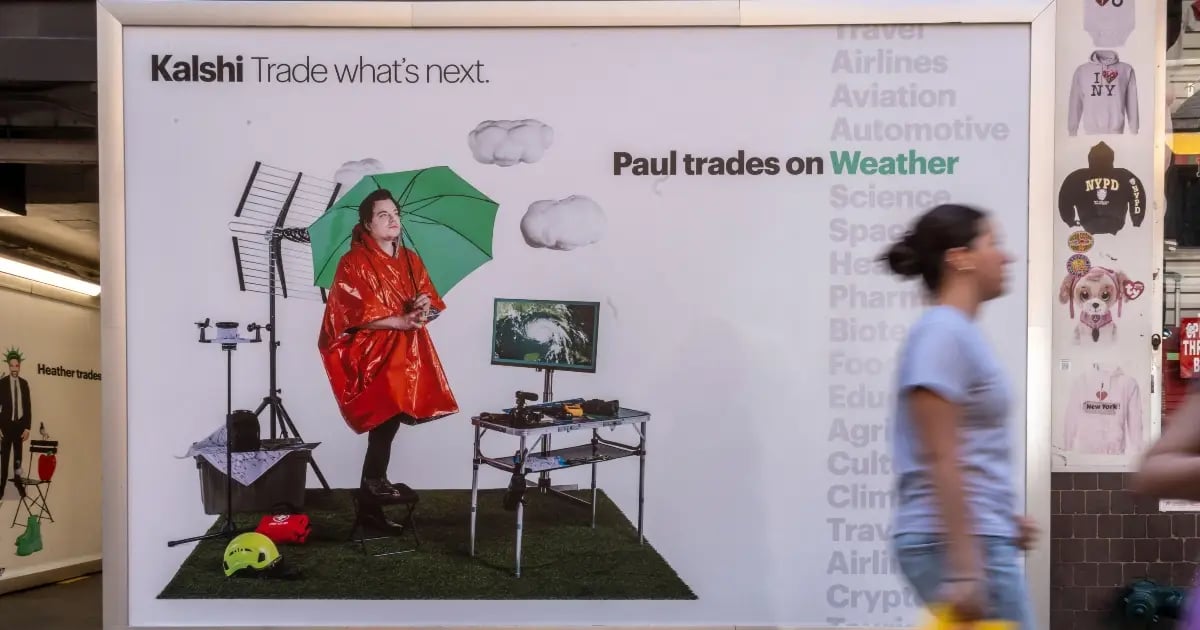
Weather has become one of the fastest-growing categories on Kalshi, the prediction market operator, with monetised bets on weather and climate events up 500% over the past year into a $1.1 billion market, the company has confirmed.
The growth has been underscored by a new deal giving Kalshi access to data from the Weather Company, owner of the Weather Channel, to verify outcomes on its weather markets.
Kalshi and its main rival Polymarket built their user bases on sports, crypto and political event contracts, but both platforms now let users bet on questions ranging from how hot a specific city will be on a given day to how many climate-fuelled disasters the US will record this year, how badly coral die-off in Hawaii will progress, and how far Lake Mead's water level will fall below its already record lows.
Kalshi's weather markets will also appear directly inside the Weather Channel's app, used by more than 330 million people worldwide.
Kalshi Frames It As Useful Data
Kalshi co-founder Tarek Mansour has previously described the company's broader goal as wanting to "financialize everything and create a tradable asset out of any difference in opinion."
A Kalshi spokesperson told the Guardian that well-calibrated forecasting data matters given the scale of the climate crisis, and confirmed the company views its weather markets as part of delivering that data, adding: "Weather is the ultimate equalizer, it fundamentally affects everyone and everything."
The two platforms draw different lines around disaster betting. Polymarket's international site still hosts wildfire markets, though US users are barred from accessing them, while Kalshi says it has never offered wildfire markets at all, citing "perverse incentives."
The distinction is not always clean cut: both platforms allow betting on the severity of heatwaves in cities such as Phoenix, Arizona, even as officials there investigate as many as 500 possibly heat-related deaths in the surrounding county, since excessive heat remains the biggest killer among extreme weather events in the US.
What It Means For Users
For anyone new to prediction markets, weather contracts work the same way as any other Kalshi or Polymarket event contract: you're trading on the outcome of a real-world event rather than placing a traditional sports bet, and prices move as new information comes in.
As with any prediction market, users should treat these as speculative financial products rather than casual wagers, and understand that the same regulatory uncertainty facing prediction markets generally, currently being tested in US courts over whether they count as sports betting, applies just as much to a bet on tomorrow's temperature as it does to one on a football game.