Bacta Rejects Burnham's 'Dodgy' Gaming Sector Comments

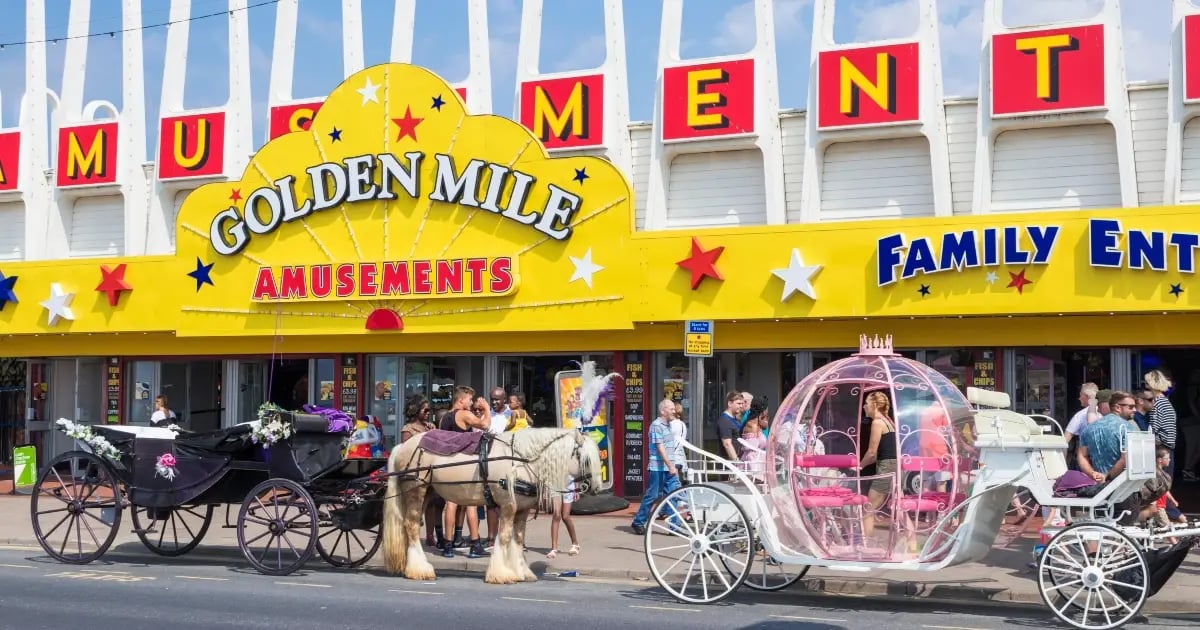
Bacta, the trade body for Britain's amusement arcades and adult gaming centres, has publicly challenged the government's recent characterisation of parts of the gambling sector as “dodgy”, arguing the claim that the industry is spreading across the high street is contradicted by the regulator's own figures.
Writing on Bacta's website, Director of Communications Allaster Gair said the prime minister's description of parts of the sector as “dodgy” was "not merely disappointing" but "an extraordinary way to characterise legitimate businesses which are licensed, closely regulated, inspected by local authorities and required to meet extensive social responsibility obligations".
Gair warned of "a dangerous idea taking hold in British politics": that governments should decide which lawful businesses make a sufficiently positive contribution to society, then use tax and regulation to punish the ones that fall out of favour. "That principle should concern every business sector, not just gambling," he wrote.

The Numbers Don't Add Up
The government's proposals, which include removing the "aim to permit" principle from the Gambling Act 2005 and giving local authorities more scope to block new gambling premises, were accompanied by a claim that betting shops and amusement arcades are "rapidly spreading" on Britain's high streets.
Bacta says that claim does not hold up against the Gambling Commission's own licensing data. The number of adult gaming centres has fallen by around 12% since 2015, and Gair argues the wider land-based gambling sector - not including online betting sites - has contracted significantly rather than expanded, meaning fewer venues are operating under greater financial pressure, not more.
Policy Built On A False Premise, Bacta Argues
"Policy cannot be credible when the premise on which it is based is demonstrably wrong," Gair wrote, adding that if the government's justification for tightening licensing rules is based on "a false account of what is happening on Britain's high streets", the proposals themselves need far greater scrutiny.
Bacta's members already operate under the Gambling Act's three licensing objectives, including protecting children and vulnerable people from harm, and Gair pointed to machine stake and prize limits, mandatory staff training, self-exclusion schemes and age verification checks already in place across licensed arcades, none of which serve alcohol on site.
Casino Games Hub
A Wider Debate On Fair Treatment
Gair also drew a historical line from the Grand National and the football pools through to bingo halls, working men's clubs and seaside arcades, arguing gambling has long been part of British social life and was traditionally a working-class pursuit that faced disproportionate restriction compared with pastimes favoured by wealthier consumers.
He illustrated the point with a comparison of everyday leisure spending: “Spend £30 on cocktails and it is hospitality. Spend £30 attending the races and it is a day out. Buy a National Lottery ticket and you are supporting good causes.
"Spend a modest amount in a licensed arcade and suddenly your choice is treated as evidence of social failure. That is not a defensible distinction.” The comments come as the government also reportedly considers reducing business rate relief for gaming venues and, separately, a possible rise in Machine Gaming Duty at the Autumn Budget.
Gair said a government has every right to regulate and tax an industry, but argued those decisions “should be based on evidence, proportionality and economic reality” rather than moral judgement of what customers choose to spend their money on.