Is Crypto Trading Gambling? A UNLV Researcher Weighs In

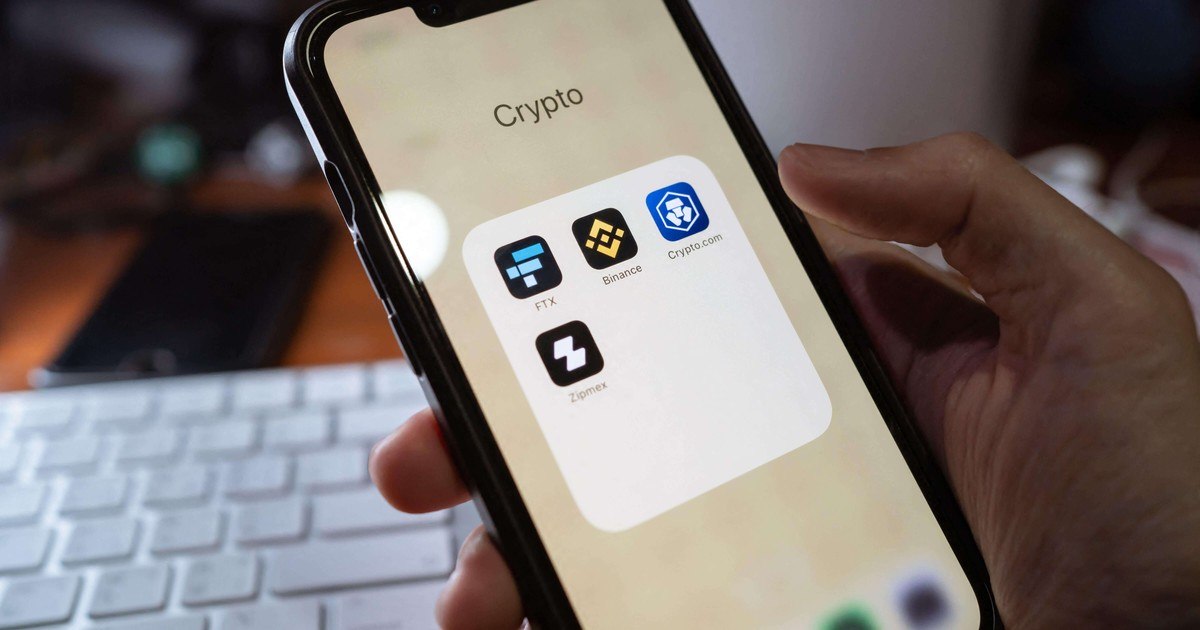
It’s late 2021 and Bitcoin is surging to what will be its record high of nearly $68,000. Dr. Tiange (Patrick) Xu, then a PhD candidate at the University of Nevada, Las Vegas (UNLV), was watching this unfold, while social media surged with stories of overnight crypto fortunes.
Not wanting to miss out on the Bitcoin gold rush, he got in on the action just as the crypto was hitting its market peak.
Within two months, Bitcoin plummeted, and almost half of Xu’s investment was wiped out.
Unlike other Bitcoin traders at the time, Xu’s game plan hasn’t relied solely on profits from cryptocurrency speculations.
He had since earned his doctorate degree and had become an Assistant Professor-in-Residence at UNLV’s William F. Harrah College of Hospitality.
Where Personal Experience Meets Academic Theory
Dr. Xu noticed that the financial loss hurt, of course, but it was not the compelling point he took from the experience. He already decided he would hold onto the digital assets for the long term, but he was noticed that he was constantly checking the value of his stake. Morning coffee, lunch breaks, before bed, or at 2:00 AM when he could not sleep, no time was safe for checking the price.
With each movement, Xu would have bouts or anxiety or adrenaline, depending on positive or negative performance. He quickly realized that even though he was not trading, the price fluctuations affected him in a similar way they affected active traders, or even gamblers.
As a researcher specializing in gaming, and having done work on problem gambling at UNLV’s International Gaming Institute (IGI), Dr. Xu saw the psychological pattern immediately.
The emotional rollercoaster, the over-the-top vigilance, the compulsive checking linked to gambling. The difference was that he wasn't pulling a slot machine handle or placing a sports wager;, he was holding a financial asset. Xu then set out to investigate the grey area between finance and gambling behavior.
When Financial Markets Become Games
24/7 Markets and Constant Engagement
Finding the mirrors between financial holding and the dynamics of casino games involves examining at the environment around digital finance. Cryptocurrency is not a game, but it does not need to be to trigger the same responses.
Financial engagement is broad, where conservative long-term accumulation of assets sits alongside speculative trading that requires consistent engagement.
Cryptocurrency is unique even within finance because it is a meeting of both these extremes. Owners can hold their crypto for long periods, but unlike stock exchange investing, which has overnight and weekend breaks, crypto markets run 24/7.
This means there’s no psychological pause, while the short-term volatility of pricing ensures an ongoing connection.
Mobile Access and Social Feedback Loops
Smartphones speed up and reduce the distance to finance, meaning there’s no space between impulse and execution. Whether it’s real-time price tickers, push notifications, or charts showing trends and predictions.
Online discourse on X, Reddit, and Discord creates a feedback loop where people celebrate high-risk trades and even huge losses. Stories of near-instant successes create a sense of FOMO (fear of missing out).
Gamification and Psychological Reinforcement
Gamification in the context of financial/crypto trading is not about clear rewards, points systems, or animations.
It’s more about the continuous engagement of alerts, price changes, social connections, and a constant feedback loop. It’s not even about making a new trade; even refreshing a balance can give enough reinforcement.
Xu examined his own habits and concluded that the ongoing access, quick feedback, and a culture of glorifying risk build a unique behavioral model.
Bitcoin or crypto trading rests on a legitimate technological and financial base, but has the same interaction dynamics as gambling.
The UNLV Research Covering 700 Crypto Traders
Xu’s personal observations were one thing, but Xu wanted to put his ideas to the test. In collaboration with Dr. Joshua Grubbs and Dr. Shane Kraus, he conducted a study that was published in the journal Public Health in 2025.
The research surveyed 700 cryptocurrency traders in the United States, chosen from a national dataset of 4,363 participants focused on behavioral addictions.
The team uses known evaluation tools, including the Problem Gambling Severity Index (PGSI), alongside metrics from gambling motivations and gambling-related cognitive distortions, which are mistaken beliefs about gambling, such as thinking you can control or predict the outcome.
The headline figures were very interesting:
- Non-problematic gambling: 32.4% of the sample
- At-risk gambling: 33.9% of the sample
- Problematic gambling: 33.7% of the sample
Survey Results and Gambling Risk Factors
This shows that two-thirds of the cryptocurrency traders surveyed met the threshold for either at-risk or problematic gambling behavior. Even though the raw percentages are significant, they only reveal a part of the story.
Probably the most interesting finding from the study came from examining why participants gambled and what they believed about gambling.
Emotional Drivers and Shared Psychological Needs
A key takeaway was that rather than just chasing financial goals, emotional and cognitive factors were driving the predictors of problematic or at-risk results.
Gambling to cope with stress or negative emotions was high on the predictive scores for problematic gambling. There was difficulty in stopping the activity once it started.
The research also found that young participants were more likely to be in the problematic range.
These findings raise the question of whether, for a substantial segment of traders, cryptocurrency market activity and traditional gambling meet similar psychological needs.
Importantly, the study’s authors make it clear that the data does not show that buying/trading Bitcoin changes a normal investor into a problem gambler.
What it does show is an overlap in behavior, with many crypto traders in the sample showing the psychological tendencies and motivations associated with problem gambling.
Investor, Trader or Gambler? The Measurement Question
The dilemma of the measurements reveals the heart of the study, moving it away from a simple warning and more toward exploring how psychology works with modern finance.
Throughout the research, the diagnostic questions such as whether gambling had ever caused participants' health or financial issues, the question was assuming everyone understood “gambling” in the same way. However, the crypto market changes the dynamic due to a blind spot in the owner's per.
If we look at two traders with identical behavior patterns. Both wake up at 2:00 AM to check prices, feel the same about the results, and spend hours analyzing.
Person A may answer YES to the question “Have you felt that you might have a problem with gambling” on PGSI, while Person B may answer NO. In this scenario, the first person views their crypto trading as a high-risk wager, whereas the second sees themselves as a long-term investor who is not gambling.
Xu points out that this perception was the main challenge facing behavioral science. The 2025 study exposed an issue where standard clinical screens designed for 20th-century casinos are being used to measure 21st-century hybrid concepts. The researchers cannot say clearly whether PGSI scores are picking up problem gamblers who happen to trade crypto, or dedicated crypto traders experiencing a brand-new form of financial compulsion that looks like gambling.
To balance this issue, Xu suggests developing a separate screening tool for crypto trading. Measuring gambling and crypto trading separately could help researchers better understand where the two overlap and where they differ.
The Psychology Shared by Crypto and Gambling
To properly understand why crypto trading and traditional gambling feel so similar, we need to look at the underlying psychology. Both options trigger the same types of cognitive mechanisms:
Ongoing participation in crypto trading can often come from the fear of missing out (FOMO), a social and psychological pressure from watching peers get sudden wealth. Once in the market, traders can fall into the illusion of control, believing that studying technical charts, reading white papers, or tracking social media trends gives them control over highly volatile short-term price movements. When trades do make mistakes, interpretative bias sets in where success is down to skill and losses are bad luck or down to market dips.
Downturns can also lead to chasing losses, where there is an urge to take even more risk to try and recoup lost capital. One interesting aspect of crypto trading is that some people are not doing it simply for financial return. Many get a thrill from the market swings or get emotional coping because the activity is an escape from daily stress, anxiety, or boredom.
In Xu’s view, these patterns may help explain why crypto trading can feel so much like gambling for some people. When an activity provides variable rewards, where outcomes are uncertain, immediate, and emotionally charged, people may respond to crypto trading and gambling in similar ways.
A New Public Health Category
Framing digital finance only through the lens of traditional pathology misses the broader evolution taking place, according to Xu and his research. Modern public health should not be seeking to slap an “addiction” label on cryptocurrency trading or trying to suggest that every investor needs help. Xu instead proposes new frameworks where public health evolves because the line between gambling and financial investment is increasingly blurry.
Historically, harm prevention and behavioral research operated in neat segments. Gambling research focused on distinct, regulated activities such as casinos, lotteries, slot machines, and sports wagers. Financial speculation in all risk profiles fell under consumer protection agencies and market regulators.
Cryptocurrency simply disrupts this separation. It operates as a legitimate financial asset class and technological network but also has an interaction loop that works a lot like traditional gambling. As Xu says, because crypto is in this ambiguous territory between investing and gambling, current public-health frameworks are operating on old knowledge.
New frameworks for public health would move the focus from classifying product types into focusing on behavior no matter what the product. So, it won’t be about “Does this person gamble?”, and more “How is the person interacting with risk, continuous feedback, and uncertain financial results?”
This sets the stage for a new way to approach public health, where the evaluation of the psychological systems is more important than working under specific labels. Crypto trading, meme stocks, micro-trading, prediction markets, and mobile sports betting would be part of the same risk profile.
When asked for advice to give traders on how to be safe and trade responsibly, Xu told Gambling.com:
“I’d suggest building in regular cooling-off periods, where you step away and do something else without checking prices. Watching every price change can pull you into emotional highs and lows, and a break helps you come back with a clearer head. That’s something I learned from my own experience.” Dr. Tiange (Patrick) Xu, Assistant Professor-in-Residence, UNLV William F. Harrah College of Hospitality
Additional Research in the Field
Xu’s study at UNLV is just one part of a wider body of research that is focusing on human behavior in connection to digital finance. Studies around the world are looking at psychology, public health, and behavioral economics, as researchers find the links between crypto trading and gambling-like behavior.
Preliminary Findings on Cryptocurrency Trading Among Regular Gamblers: A New Risk for Problem Gambling?
Rutgers University research found that normal gamblers who also trade cryptocurrency have higher rates of gambling-type harm. This suggests that crypto trading adds a similar risk on top of gambling instead of just being another activity. The researchers were trying to find if trading Bitcoin and other cryptos was an independent risk factor, specifically for people who already gamble.
Cryptocurrency Trading and Its Associations with Gambling and Mental Health: A Scoping Review
A study from the University of Queensland in Australia mapped global research to see the links between crypto trading, gambling, and mental health challenges such as anxiety and depression. By checking global datasets to see if high-frequency crypto traders share psychological profiles with problem gamblers, the team found a direct link that shows both activities tap into the same psychology.
Cryptocurrencies as Gamified Financial Assets and Crypto Casinos: Novel Risks for a Public Health Approach to Gambling
Looking at the connections through the lens of structure and regulation, a study from the University of Bristol agreed that public health must change because of hybrid risks. Through analysis of how digital currencies function as both market assets and the payment method for borderless crypto casinos, it explored how 24/7 markets and a lack of financial controls challenge current regulations.
Prediction Markets – a New Breed of Gamified Trading
Prediction markets are stirring a heated debate nowadays about the difference between financial trading and gambling. Regulated by the Commodities Futures Trading Commission (CFTC), a federal agency, as opposed to traditional gambling that is regulated by states and tribes, they are not subject to the same restrictions and safeguards (e.g. age and responsible gaming, respectively).
When asked if prediction markets further blur the line between trading and gambling, Xu told Gambling.com:

“Yes, I think they are. Unlike a stock or even crypto, which you can hold for the long term, a prediction market contract is tied to a single event: it pays out if you’re right and is worth nothing if you’re wrong. So a contract on a basketball game works much like a sports bet, but because it’s called trading, people may not think of it as gambling.” Dr. Tiange (Patrick) Xu, Assistant Professor-in-Residence, UNLV William F. Harrah College of Hospitality
Conclusion: Lines Are Getting Harder to Draw
Dr. Tiange (Patrick) Xu’s Bitcoin still sits quietly in his digital wallet. It is a reminder of the night he found himself checking prices at 2:00 AM, but also the crucial intellectual inspiration that followed. Rather than concluding that cryptocurrency should be dismissed entirely or labeled as a vice, his experience gave rise to a full study.
For decades, regulators, clinicians, and researchers have been operating within clear boundaries. A person walking up to a casino blackjack table was gambling, while a person opening a brokerage account to buy assets was investing. Modern digital markets are quickly making those differences obsolete.
The way Xu sees it, the study shows that the best way forward for behavioral science is not to decide if cryptocurrency trading is “gambling” but to ask a different question. When does activity in financial markets produce the same psychological experience as gambling, and what can we do to measure it?