All-Weather Racing Explained: The Tracks, Surfaces And Why It Is Vital

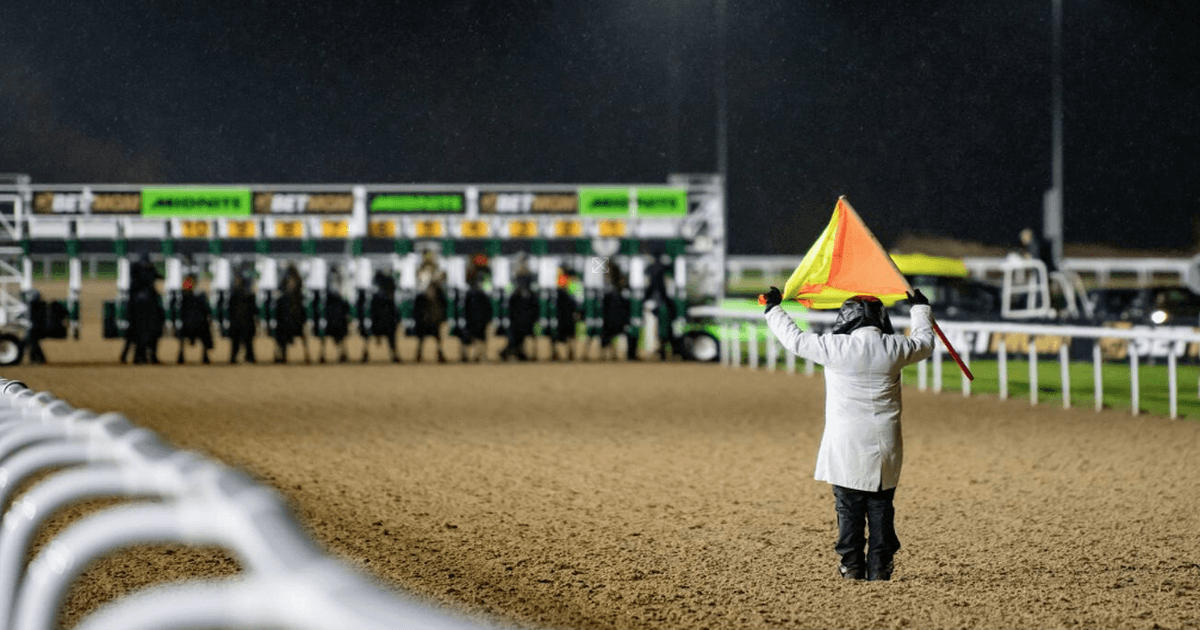
When frost, rain and waterlogged ground wipe out the jumps cards, all-weather racing is what keeps the sport and the betting industry ticking over.
Here's what it actually is and why it's become so important.
What Is All-Weather Racing?
All-weather racing is flat racing run on a synthetic surface instead of turf.
These surfaces drain quickly and hold up in conditions that would leave a turf track unraceable, so meetings can go ahead through frost, heavy rain and other inclement stretches that so often force jump fixtures to abandon.
It's not treated as some lesser cousin of the "real" sport either. It's got its own championship series, its own Group and Listed races, and its own regular evening fixtures that keep online betting sites ticking over, and plenty of punters now build their week around.
Polytrack Vs Tapeta
There are two synthetic surfaces used in Britain, and they don't necessarily ride the same way, so it's worth knowing which is which.
Polytrack is a mix of sand, synthetic fibres and recycled rubber bound with a wax coating. It's the older of the two and tends to be similar to good turf ground with very little kickback.
Tapeta is made from silica sand, wax and fibres, and while it rides similarly to Polytrack, it's generally considered a touch firmer and quicker underfoot.
Neither surface lines up with the turf going scale, which is why all-weather tracks use their own terms instead - Standard, Standard to Slow, Slow, Standard to Fast and Fast - rather than Good or Soft.

 Is there live streaming of sporting events?
 Is there live streaming of sporting events?
 Is there live streaming of sporting events?
The British Tracks
Britain currently has five all-weather courses in operation, with racing at Chelmsford still abandoned due to licensing problems.
Kempton and Lingfield race on Polytrack, while Newcastle, Wolverhampton and Southwell race on Tapeta.
Newcastle is the newest of the six and the only all-weather track anywhere with a straight mile.
Wolverhampton was the first course in Britain to race under floodlights, and its weekend evening meetings are still a staple of the winter calendar.
Lingfield hosts the Winter Derby meeting every February, the most prestigious all-weather fixture on the calendar, and Kempton is Britain's only right-handed all-weather track.

Why It's So Important During Winter
Jump racing lives at the mercy of the weather.
A hard frost, a waterlogged track or a sudden thaw can wipe out a meeting at short notice, and during a bad winter, that can happen several times a week.
All-weather racing was built to plug that gap. It gives trainers somewhere to keep horses ticking over through the winter rather than sitting idle in the yard, and it gives punters and bookmakers a dependable daily card at exactly the time of year the jumps schedule is at its shakiest.

That's the thinking behind the All-Weather Championships, a season-long series running from October through to Good Friday that rewards the best horses, jockeys and trainers over the winter with a finals day at Lingfield.
It's also why floodlit evening racing at tracks like Wolverhampton and Newcastle has caught on the way it has. There's often not much else happening on a Tuesday or Friday night, and it's competitive racing you can rely on.
All-weather racing has long since gone beyond being a winter filler.
It's now central to keeping the sport running and punters betting throughout the months when turf racing simply can't be trusted to take place.