The Most Annoying Musical Instruments In The History Of Sport

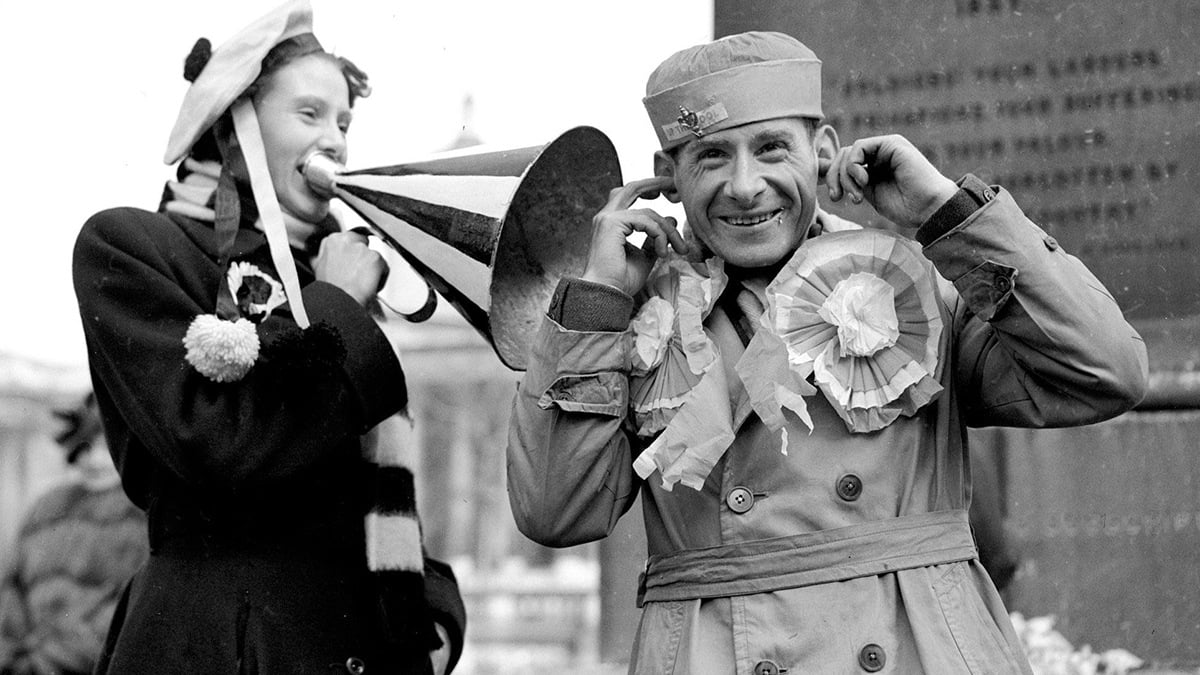
As the world prepares for the 2026 FIFA World Cup in the United States, Canada and Mexico, one thing is guaranteed: the sound of millions of fans making themselves heard.
From wooden clackers on early British terraces to plastic horns that rattled global TV broadcasts, sporting events have long been accompanied by instruments that are less about music and more about volume, atmosphere and psychological warfare.
A new historical look at the most annoying musical instruments in sporting history reveals that while technology and fan culture have evolved, the mission has remained the same: be louder than the other side.

1880s - Present: The Bull Roarer, Australian Rules Football
One of the oldest noise-making instruments on earth, the bull roarer (5/10 annoyance factor) is a flat piece of wood on a cord, spun rapidly overhead to produce a deep, resonant whirring that carries over long distances.
Originating with Indigenous Australians tens of thousands of years ago, it produces a sound of up to 85 dB.
The instrument became associated with Australian Rules Football from the 1880s onward, used in ceremonial and pre-match contexts around the game’s earliest fixtures.
Its low, otherworldly drone carried a sense of occasion that no synthetic noisemaker has since managed to replicate.
The connection between the bull roarer and Australian Rules reflects the sport’s deep Indigenous roots - the game itself is widely regarded as having been influenced by the Aboriginal game of Marn Grook.
While the bull roarer is no longer a fixture at modern stadiums, it holds the distinction of being the earliest instrument on this list by several centuries - a reminder that the human urge to make noise at sporting events is as old as sport itself.

While You Are Here, Why Not Check Out Our Free Slots and Free Casino Games?
Early 1900s - The Football Rattle
One of the earliest mass fan noisemakers, the football (soccer) rattle (7/10 annoyance factor) was a simple wooden device with a spinning cog that produced a relentless clacking sound when rotated.
Thousands of supporters would spin them simultaneously, creating a mechanical roar across stadium terraces.
By the 1960s and ’70s safety concerns and changing fan culture led to their decline.
1920s - Present: Bagpipes At Rugby Matches
Few instruments are more culturally iconic—or acoustically powerful—than the Scottish bagpipe (6/10 annoyance factor).
Played before matches and sometimes in the stands, bagpipes produce a penetrating drone that can carry across entire stadiums.
For supporters, they symbolize national pride. For opponents sitting nearby, the experience can be less poetic.

1960s - 1980s: Air Horns & Klaxons, Football
Portable compressed-air horns (9/10 annoyance factor) became widely available in the mid-20th century and quickly found their way into stadiums.
Unlike rhythmic instruments, air horns disrupt play with sudden blasts designed to cut through crowd noise.
1980s - Present: Chainsaws At Motorsport Events
At some motorcycle racing events, fans bring chainsaws with the chain removed (8/10 annoyance factor) and rev them as a tribute to horsepower and mechanical power.
Layered on top of already deafening racing engines, the effect is pure industrial chaos.
1990s - 2000s: Thundersticks
Inflatable thundersticks (6/10 annoyance factor) became a staple at North American sporting events, often handed out during promotional nights.
Fans bang them together in rhythm, creating a hollow plastic popping sound that fills arenas.
1990s - Present: Cowbells At Downhill Mountain Biking
Few fan instruments capture the chaos and carnival atmosphere of elite sport quite like the cowbell (4/10 annoyance factor).
Rooted in Alpine tradition - where Swiss farmers used bells on cattle grazing mountain pastures - cowbells migrated naturally into skiing culture and, by the time UCI Downhill Mountain Bike World Cup racing took hold in the early 1990s, they became an unmistakable fixture on course.
Fans line the trails at events like Fort William, Leogang and Snowshoe, ringing cowbells furiously as riders hurtle past at speeds exceeding 70 km/h.
Measured at around 100 – 110 dB at close range, the noise is significant — but the festive, rhythmic quality keeps the annoyance rating relatively low.
2010 - The Vuvuzela Phenomenon
No sporting noisemaker has achieved global notoriety quite like the vuvuzela (10/10 annoyance factor).
The long plastic horn produces a monotone drone at roughly 230–235 Hz, and during the 2010 World Cup it created a constant buzzing blanket that dominated broadcasts and stadium acoustics.
Players struggled to communicate. Television networks experimented with audio filters. Viewers around the world debated whether it was atmosphere or auditory torture.
2012 - The Caxirola
Designed by Brazilian musician Carlinhos Brown as the official noisemaker of the 2014 FIFA World Cup, the caxirola (5/10 annoyance factor) was meant to be the vuvuzela’s kinder, quieter successor.
A sealed plastic rattle filled with synthetic pellets, it produces around 79 – 86 dB — roughly 40 decibels quieter than the vuvuzela.
Despite its modest volume, the caxirola was banned from stadiums before the tournament even began.
During a 2013 Confederations Cup test match in Salvador, fans pelted the pitch with them after their team conceded five goals. Its annoyance, it turned out, was less acoustic and more aerodynamic.
2019 - Present: Fog Horns
One of the most recent additions to the sporting noisemaker canon, the fog horn (8/10 annoyance factor) is a large industrial-grade horn originally designed for maritime navigation.
Unlike the compact air horn or klaxon, a fog horn produces a deep, resonant blast at around 105–110 dB - lower in pitch but enormous in volume, with a sound that carries far beyond stadium walls.
The fog horn emerged as a fan accessory at Premier League football grounds in the late 2010s, most notably at Chelsea FC’s Stamford Bridge.
Supporters began bringing large maritime-style fog horns to matches, creating sustained blasts that drowned out stadium announcements and, at times, referee whistles.
The disruption was significant enough that Chelsea and several other clubs sought stadium bans on the instrument - a rare honour usually reserved for items considered weapons.
The fog horn’s combination of raw volume, low frequency and sheer portability makes it uniquely irritating: it cannot be rhythmically absorbed into crowd noise the way drums or cowbells can.
One sustained blast cuts through everything. For that reason, despite its relatively recent arrival, it earns one of the higher annoyance ratings on this list.