Casino News Roundup: Las Vegas Ghost Casino & William Hill's UK Retreat

Welcome to the Casino Daily News Roundup - your briefing on the latest news from the global casino industry. We bring you the biggest stories from across the sector, covering everything from major business deals and revenue figures to new openings and regulatory developments.
The Curious Case Of Las Vegas' Tropicana Pop-Up Casino
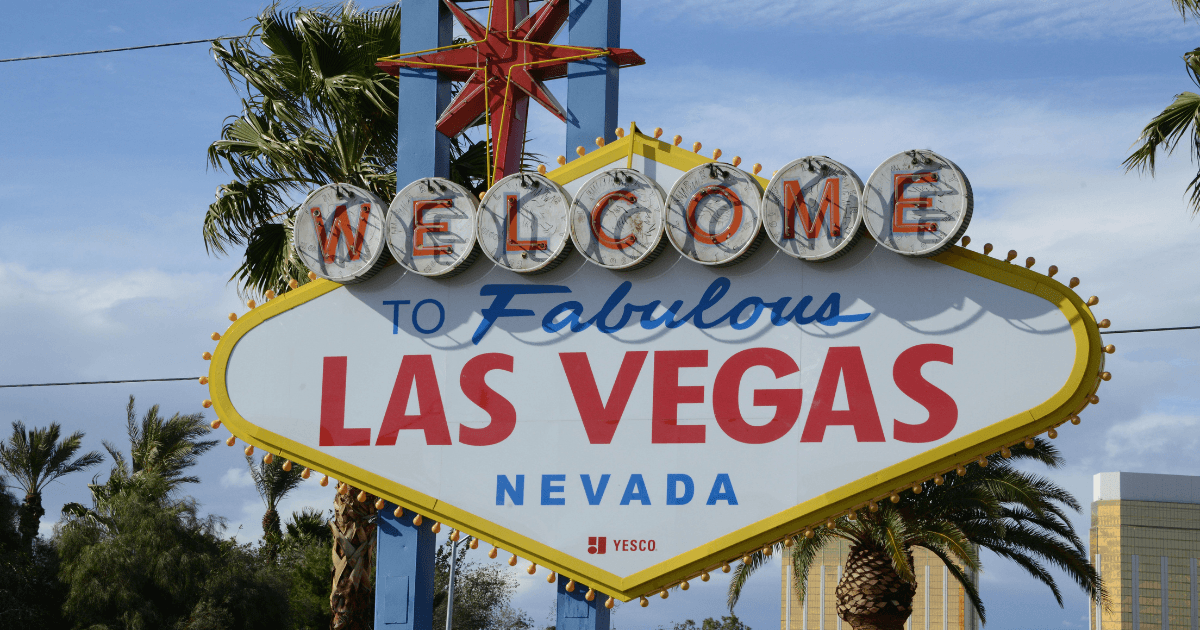
Las Vegas has seen some unusual sights over the decades, but few quite as peculiar as what appeared on the corner of Las Vegas Boulevard and Tropicana Avenue this week.
Where a grand casino-resort once stood, a construction trailer has been serving as a fully operational—if extremely modest—casino.
Bally's Corp., the owner of the former Tropicana Las Vegas site, opened a temporary pop-up casino on March 31, offering public access to just 16 slot machines inside a construction trailer.
The setup ran daily from 9 a.m. to 5 p.m. through April 2, and it had nothing to do with novelty.
The move is a legal necessity.
Nevada gaming regulations require that a property holding a non-restricted gaming license demonstrate active on-site gaming at least once every 24 months.
Fail to do so, and the license is automatically suspended, a potentially catastrophic outcome for a prime Strip property with enormous future value.

The Tropicana itself closed in April 2024 and was demolished in October of that year, clearing the way for a 33,000-seat baseball stadium being built for the Athletics, who are due to relocate to Las Vegas in 2028.
Bally's plans to develop a new casino-resort on the remaining land, but with construction timelines still in flux, the gaming license must be kept alive in the meantime.
The slot machines on-site did not accept ticket-in, ticket-out vouchers, meaning all winnings had to be paid by hand.
Equipment was supplied by International Game Technology, which also assumed responsibility for any player losses during the operation.
It was, in short, the world's least glamorous casino, but a legally essential one.
This kind of temporary activation is not entirely new in Las Vegas. Similar brief gaming events have occurred at the former Moulin Rouge site and at several downtown properties over the years.
But seeing it play out at one of the most iconic corners on the Las Vegas Strip is a vivid reminder of how Nevada's licensing framework shapes every aspect of casino development, even during a building site's quietest period.
For those looking to explore online casinos while Las Vegas's newest chapter takes shape, there is no shortage of options beyond the construction fence.

iGaming Legalization Hits A Wall In Virginia & Maryland
The push to expand legal real money slots and online casino gaming across the US suffered back-to-back setbacks in March, as two of the most closely watched state efforts ran out of road.
Virginia
In Virginia, the 2026 legislative session ended on March 14 without a final iGaming bill reaching the governor's desk.
Both the House and the Senate had advanced separate bills, HB 161 and SB 118, but a conference committee formed to reconcile the two measures failed to reach an agreement before the session closed.
Both bills also contained a reenactment clause, meaning that even if they had passed, they would have needed to be approved again in 2027 before taking effect.
Online casinos in Virginia are now realistically off the table until at least 2028.
Maryland
State Senator Ron Watson withdrew his iGaming legalization bill, SB 761, on March 13, effectively ending any prospect of regulated online casino gaming in Maryland this year.
Watson had cited Virginia's apparent progress as a catalyst for his own push, only for that progress to collapse at the same time as his own effort.
A separate Senate bill, SB 885, remains technically alive but faces steep odds with the legislative calendar running short.
Only eight states currently permit real-money online casino gaming. Proponents argue the untapped tax revenue is enormous; Watson projected iGaming could generate $1.6 billion in tax revenue for Maryland over five years.
Opponents, including some brick-and-mortar casino operators, have pushed back hard, arguing that online gaming cannibalizes land-based revenue and costs jobs.
With 71% of Maryland voters opposed to iGaming legalization in a recent poll, the legislative math remains difficult.
The dual failure is a significant blow to the US iGaming expansion movement heading into the second quarter of 2026.

William Hill to Close 200 UK Shops as Tax Hikes Bite
It is shaping up to be a turbulent spring for the UK's high street betting industry.
William Hill's parent company, Evoke, confirmed on March 31 that it will permanently close around 200 of its UK betting shops beginning in May, roughly 15% of its 1,300-strong retail estate, putting up to 1,500 jobs at risk.
The company pointed directly to the tax changes announced in Chancellor Rachel Reeves' Autumn Budget last October.
From April 1, 2026, remote gaming duty on online casino revenues rose sharply from 21% to 40%, one of the most significant tax increases ever imposed on the UK gambling sector.
Evoke CEO Per Widerström had described the measures at the time as "ill-thought-through, counterproductive, and highly damaging."
The wider picture for Evoke is concerning. Its share price has fallen by more than 28% over the past 12 months to just 34.05p, with debt estimated at £1.8 billion.
Both Bally 's-Intralot and Betfred have been linked to a potential acquisition, while Ironshield Capital Management, a firm specializing in distressed European credit situations, disclosed a 6.07% stake in the company this week.
William Hill is not the first operator to pull back from the high street.
Flutter closed 57 UK shops last year alongside 28 Paddy Power locations in Ireland, and with gross gambling yield from betting shops already down 7% year-on-year in the final quarter of 2025, it is unlikely to be the last.

While You Are Here, Why Not Check Out Our Free Slots and Free Casino Games?
VICI Properties Expands Into Canada With $144M Alberta Casino Deal
In a sign of growing appetite for gaming real estate beyond the United States, New York-based VICI Properties has announced that it is acquiring the real estate assets of two Alberta casino properties for approximately $144.4 million.
The deal covers Deerfoot Inn & Casino in Calgary and Great Northern Casino in Grande Prairie, along with two limited-service hotels adjacent to the Grande Prairie property.
The transaction is tied to Pure Casino Entertainment's planned take-private acquisition of Gamehost Inc., a Toronto-listed casino operator.
Gamehost shareholders were offered $13.65 per share, a 16% premium over the company's March 27 closing price.
The deal is expected to close in mid-2026, subject to regulatory approval.
Once complete, the properties will join VICI's existing triple-net master lease with Pure Casino Entertainment.
That lease is backed by Indigenous Gaming Partners, a group comprising several First Nations communities and Sonco Gaming. Annual rent will increase by CAD $16.1m, at an 8.0% acquisition capitalization rate.
VICI president and COO John Payne described Canada as "a very steady and stable gaming jurisdiction."
Analyst Barry Jonas of Truist Securities called the rent coverage on the purchase "healthy." For VICI, best known for its extensive US portfolio, including landmark Las Vegas properties, the deal marks a meaningful step in broadening its international footprint.