How Has The Grand National Changed?

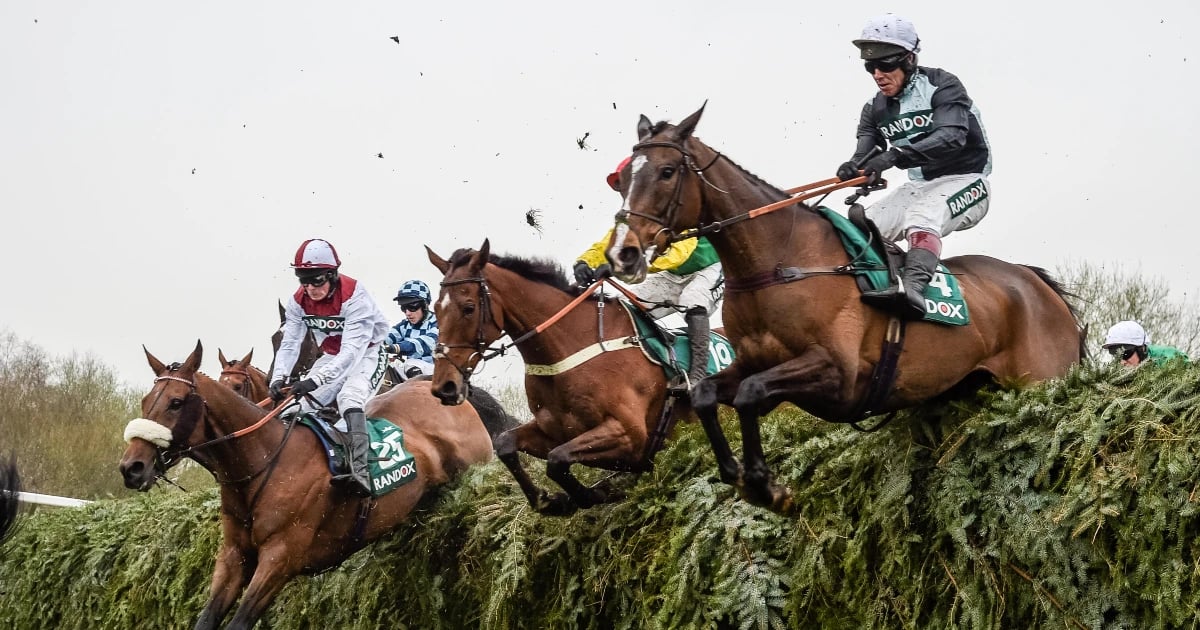
The Grand National has been reinventing itself since 1839, but the pace of change has accelerated sharply in the last two decades.
Fence modifications, field-size caps, welfare upgrades and declaration-stage overhauls have all reshaped the race without stripping away the spectacle that draws a global audience of over 600 million.
With the 2026 renewal at Aintree on Saturday, April 11, here is a look at how the modern Grand National differs from the race older generations remember.
The Fences
What makes the Grand National unique is the spruce-topped fences, none smaller than 4ft 6in, if you discount the 2ft 7in Water Jump.
Many have been officially modified over the years, none more so than Becher's Brook.
When it was named in 1839, Becher's stood 4ft 10in, with a drop of nearly eight feet and a brook directly underneath.
The brook was filled in 1990, the landing side was levelled in 2011 and today the drop is between five and 10 inches.
Several other fences have been reshaped too: the plain fence jumped fourth and 20th was cut by two inches to 4ft 10in in 2012, landing areas across the course have been smoothed and the solid timber cores on most obstacles have been replaced with flexible plastic or birch.

Distance, Field Size And Declarations
The Grand National was always run over roughly four and a half miles until 2013, when the start was moved closer to the first fence to help horses settle away from the noise of the grandstands.
That trimmed the distance to its current four miles, two furlongs and 74 yards.
The maximum field size was capped at 40 in 1984, then reduced further to 34 ahead of the 2024 renewal as a safety measure.
From 2026, the race has moved to 72-hour declarations, with the final field confirmed on the Wednesday before the race rather than the Thursday, and the number of reserves has increased from four to six to help ensure a full field lines up.
Weights, Prize Money And Horse Welfare
Topweights once carried 12st or more, but that was capped at 12st in 1956, reduced to 11st 12lb in 2002 and again to 11st 10lb in 2009.
A 2022 British Horseracing Authority change added 2lb to published weights across the board, making the effective top weight 11st 12lb from 2024 onwards - the burden I Am Maximus has shouldered in each of the last two renewals.
The total prize fund now stands at £1million, with £500,000 going to the winner and prize money extending to 10th place.
Horse welfare measures have also transformed the race: raceday veterinary inspections were introduced in 2002, horses are forbidden from running in another race that week, the minimum age was raised to seven and Aintree built a dedicated post-race washdown and cooling-off area in 2012.
Women In The National
Charlotte Brew was the first woman to ride in the Grand National, partnering 100/1 chance Barony Fort in 1977 before he refused at the fourth-last fence.
Progress was slow between then and 1994; 15 other women took part, but not a single woman got a ride again until 2005.
Since then, the landscape has shifted dramatically, with Katie Walsh finishing third on Seabass in 2012 for what was then the highest placing by a female jockey.
Rachael Blackmore went one better in 2021, becoming the first woman to win the race, a landmark moment for the sport, and one enjoyed by many punters and Grand National sweepstake winners.
Blackmore announced her retirement from racing in 2025, but her legacy at Aintree and beyond endures.

The Grand National is a race that never stands still.
From flexible fence cores and compressed handicaps to 72-hour declarations and expanded reserves, the changes keep coming - each one designed to balance the tradition that makes the race special with the modern standards the sport demands.
What hasn't changed is the challenge: 34 runners, 30 fences, four miles of Aintree and one race that captures the nation's imagination like no other.
If you are looking for some help in picking your Grand National wagers with betting sites, you should check out our experts' daily horse racing tips and betting news.
What are your thoughts on the Grand National changes over the years, or are there any changes you would like to see being made to the famous race?
Leave your comments below!