Point Spread Explained: What Does Spread in Sports Betting Mean?

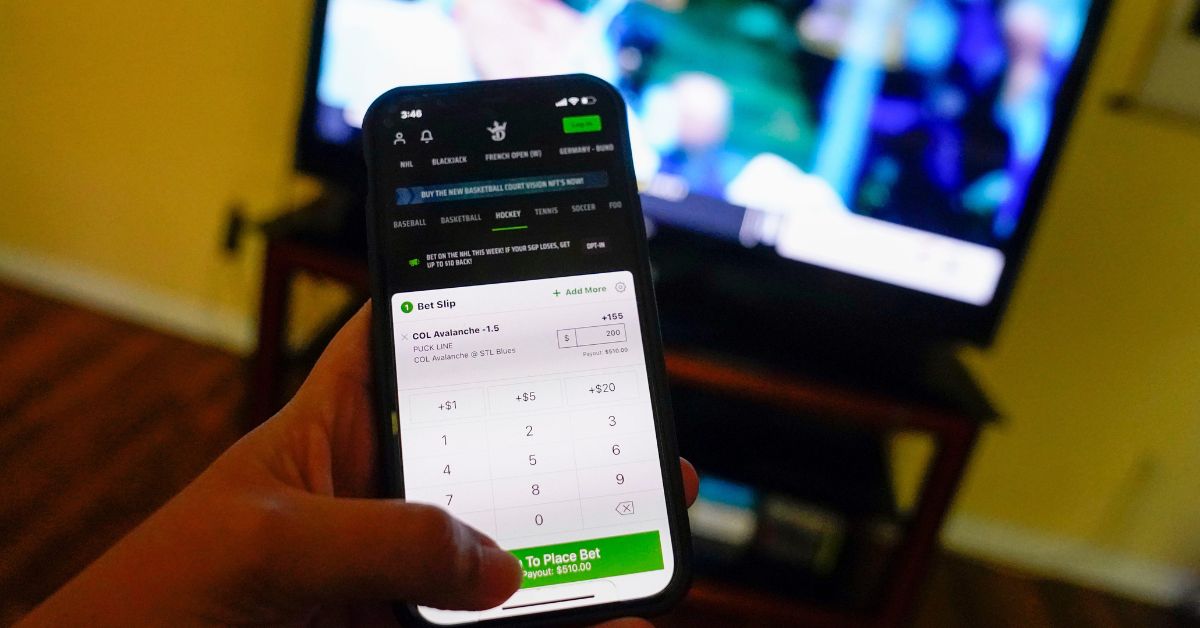
Point spreads are among the most popular betting types. This guide overviews point spread betting, what the point spread means, and how to place spread wagers on the NFL, NBA, and more.
What Does Spread Mean in Betting?
A point spread allows the oddsmakers to provide a small margin of error to even the odds between two teams. Online sportsbooks project the margin of victory of the winning team, and you place your bet on whether you think that margin will be higher or lower than their projections.
The spread indicates the number of points separating the two teams' scores.
How Does a Point Spread Work?
Oddsmakers will develop odds based on thorough statistical analysis and choose favored and underdog teams. Favored teams are signaled with a negative number, while underdog teams are listed with a positive number.
These two outcomes have different meanings depending on your research and which team you have decided to bet on:
- The negative number signifies how many points the favored team has to win the game for a bet to pay out.
- The positive number signifies that the underdog team must either 1) win or 2) lose by less than that amount to pay out.
This will give the underdog a slight advantage. Where you may not find value in betting on an underdog on the moneyline, you can find some value here with point spreads.
How to Read Point Spread Odds
We have the basics of a point spread wager down; now, let’s look at the odds associated with your wager. If you’re familiar with moneylines, you will understand how the odds work, but we can briefly go over this again.
The odds for these teams indicate the likelihood of each team winning the game.
Again, the minus-sign symbol indicates that the team is likely to win. The bigger the negative number, the more likely that team is to win.
The plus sign again indicates the underdog team. The bigger the positive number, the less likely the team is to win.
Point Spread Betting using American Odds
American odds are most prevalent in North America.
When you look at the point spreads for a game, you will see the number represented in either the plus or minus, and then the American odds—most likely somewhere around -105 or -110, but sometimes you may see upwards of 20 points on either side—will be next to them in brackets.
Point spread odds aren’t in the same ranges you would see with moneylines, as huge underdogs exist. A margin of error is associated with point spreads, so oddsmakers don’t tend to be too risky with this betting type.
American odds show you your potential winnings on a $100 wager if you’re betting on underdog odds. If you bet on a +7.5-point spread with odds of +105, you would win $105 on a winning $100 wager.
The favored team’s odds will show us how much we need to wager to win $100. For example, if the -7.5 point spread had (-115) odds, you would need to wager $115 to profit $100.
It’s that simple.
Alternative Odds Formats
Decimal Odds

The decimal format is also used in North America, but is more prevalent as a standard odds format in Europe.
Decimal odds are very simple and show how much you could win for each dollar you bet. All you need to do is take the decimal odds that are listed by the team you want to bet on and multiply your stake by those odds, subtracting your $1 from your odds.
To convert positive American odds to decimal odds, divide the odds by 100 and add 1.
Our +105 underdog odds above on an $80 wager would work out to 2.05. All we would need to do is multiply 2.05 by 80 to get $164 in profit. You would receive $244 back on a winning bet.
To convert negative American odds to decimal odds, divide 100 by the odds and add 1.
Our favored team’s -115 odds translate to 1.87 in decimal odds. If we were to place an $80 wager on them, we would take away our initial $1 to make the odds .87:
80 multiplied by 0.87 equals $69.60, and you would also receive your $80 back, for a total of $149.60 in winnings.
Fractional Odds
When using fractional odds for point spreads, you follow the same rules as the other formats. You will multiply your stake by the numerator and then divide that by the denominator.
The -115 odds above for our 7.5-point favorite translate to 87/100 in fractional odds. If we were to bet $50, we would multiply 50 by 87 to get 4,350, then divide by 100 to get $43.50 in winnings. On top of your initial $50 stake, that's a $93.50 payout.
The underdogs, on the other hand, would have fractional odds of 21/20. This would mean we would multiply $50 by 21 to get 1,050, then divide that by 20 to get $52.50 in winnings. Add this to your initial $50 to more than double your money.
Point Spread Betting by Sport
Point spreads can be displayed differently or look different depending on which sport you are betting on. Sometimes, point spreads even have different names in different sports.
We want to show you real examples of point spreads for each professional sport so you know what they should look like.
Football Point Spread Explained
NFL point spreads are arguably more popular than moneyline wagers or totals for regular Sunday betting. With point spreads, you can bet on underdogs with a little more confidence. You may see spreads ranging from 1.5 to 11 points, depending on the teams and sites in question.
Popular point spreads are set as field goal or touchdown differential (3.5 or 6.5). If you are betting on the Indianapolis Colts (+3.5) and the Detroit Lions (-3.5), you know the Lions are favored and need to win by more than four points, and the Colts are the underdogs and need to win or lose by less than three.
Basketball Spread Betting
We all know the NBA is high-scoring, which can make predicting the score nearly impossible. However, we don’t see large spreads in the NBA due to the caliber of play. Teams tend to be so closely matched, and they can score so quickly, that if sites keep the spreads close, they won’t have huge risks in the games.
You might commonly see -1.5/+1.5 spreads or even a few points more, but nothing too high unless we look at a huge underdog situation.
Puck Lines
Hockey doesn’t record points; they record goals. In the NHL, we call point spreads puck lines. They work the same as point spreads in other sports; they just go by a different name.
You can find spreads between 0.5 and 5.5 goals, as hockey is such a low-scoring game. You may find a point spread on a Montreal Canadiens (-1.5) and Boston Bruins (+1.5) game you want to bet on. This means the Canadiens are favored and will need to win by 2 or more points, and the Bruins are the underdogs and need to win. The Bruins can lose by 1 goal, and your bet will still win.
Runlines
Baseball is another sport that doesn’t track points; they track runs. Baseball point spreads are aptly named runlines. Runline spreads usually are in the 0.5 to 2.5 range, but in baseball, it can be easy to accumulate points fast. All a team needs is one hot inning or a Grand Slam, and we're looking at a vastly different ball game.
If you’re looking at the Arizona Diamondbacks (+1.5) versus the Pittsburgh Pirates (-1.5), we predict a close game, and the Pirates are favored, meaning they will need to win by 2 points. If you bet on the Diamondbacks, they could lose by one run or win the game outright for that bet to cash out.
Goal Lines
Soccer spreads, or goal-line wagers, because they don’t track points, are one of the trickier point spreads because they often are fractions of points. You may see your usual 0.5, 1, or 1.5, but you will also see quarter points.
Soccer games can end in a draw, meaning the teams tie and force a push. You wouldn’t win anything; your stake is returned.
Finding Best Point Spread Betting Sportsbooks
Now that you know how point spread bets work and how to read the odds, you can start preparing your betting strategy. Finding sports betting apps for point spread betting is the best starting point if you’re new to sports betting. This should be your top priority.
Our reviews provide an in-depth look at the most important criteria sports bettors of all skill levels consider, including deposit options, bonus information, sign-up processes, security, app compatibility, and more.
Finding a sportsbook that suits your needs is important, and ensuring it offers great point-spread odds is even more important.