Betting Odds Explained: How Betting Odds Work

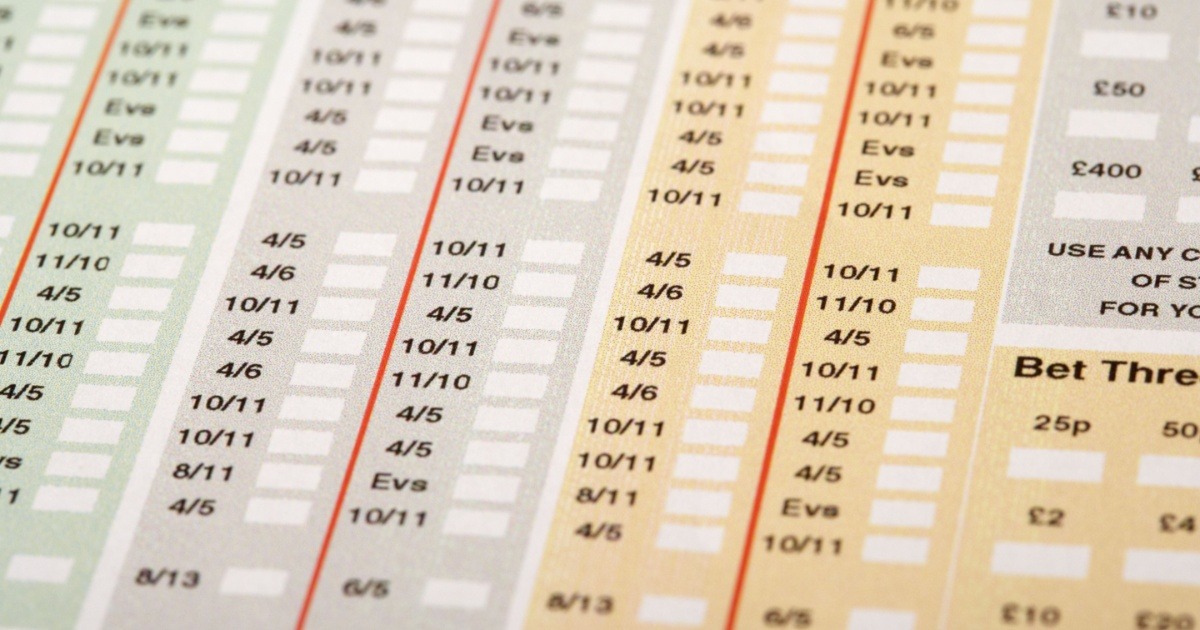
Betting odds do two things at once: they reflect how likely an outcome is, and they determine how much you win if you're right. Every number you see on a sportsbook—the spread, the moneyline, the total—is rooted in those two functions.
This guide breaks down each odds type, shows you how to read them, and explains what's really happening when a line moves.
Common Types of Odds & What They Tell You
Moneyline Odds
A moneyline bet is simpler: pick who wins, no spread involved. The odds tell you how much you win relative to your stake.
- Negative odds = favorite. You risk more than you win.
- Positive odds = underdog. You win more than you risk.
Example: Tampa Bay Buccaneers -216, Los Angeles Chargers +170
A $216 bet on Tampa Bay wins $100. A $100 bet on the Chargers wins $170. In both cases, your original stake is returned with the winnings.
Point Spread Odds
When two teams aren't evenly matched, a point spread levels the playing field. The favorite gives up points; the underdog gets them. You're not betting on who wins; you're betting on whether a team wins by enough or loses by less than expected.
Example:
- Tampa Bay Buccaneers -4
- Los Angeles Chargers +4
The Buccaneers are favored by 4. Bet Tampa Bay, and they need to win by 5 or more. Bet the Chargers, and they can lose by up to 3, and you still win. If Tampa wins by exactly 4, it's a push, and all bets are returned.
Totals Odds
Instead of picking a winner, you're betting on the combined score of both teams. The sportsbook sets a number; you wager whether the actual total will land over or under it.
Example:
- Over 41.5 -110
- Under 41.5 -110
Both sides priced at -110 is standard. That pricing is intentional, and it's where the sportsbook makes its money (more on that below).
Prop Bets & Futures
Proposition bets are wagers on specific in-game events: a player scoring a touchdown, a quarterback's passing yards finishing over/under a set number, or which team scores first. They use moneyline-style pricing.
Futures are long-range wagers on season-long outcomes: division winners, conference champions, Super Bowl, and Stanley Cup. You're selecting from a list of teams, each priced at odds that reflect their perceived probability.
Both bet types carry more juice than standard spread bets, and futures in particular can tie up your money for months.
Parlays
A parlay combines multiple bets onto one ticket. Every selection must win for the ticket to pay. The upside is a multiplied payout; the downside is that one wrong pick voids the whole thing.
Here are the standard Las Vegas parlay odds on the spread:
| Legs | Odds |
| 2 | +260 |
| 3 | +660 |
| 4 | +1100 |
| 5 | +2200 |
| 6 | +4500 |
| 7 | +9000 |
Moneyline parlays are calculated individually based on each leg's odds. Every sportsbook's input interface will automatically calculate this.
Understanding the Vig (-110 and Why It Exists)
The -110 attached to spread and totals bets isn't arbitrary. It's the sportsbook's built-in margin, known as the vigorish or juice.
Here's how it works in practice:
The math: if 10 people each bet $110 on the over, and another 10 each bet $110 on the under, the sportsbook holds $2,200. When one side wins, it pays out $210 to each of 10 winners ($2,100 total), and keeps $100 without any risk.
That $100 margin only works if the action is balanced. When it isn't, the sportsbook adjusts the line.
How Lines Move
Sportsbooks want equal money on both sides of every bet. When one side attracts disproportionate action, they have two tools:
- Adjust the juice: Change -110/-110 to -120/-100 to make one side cheaper
- Move the spread: Shift the number itself if the juice adjustment isn't enough
Line movement can be a signal. Large, fast moves often indicate sharp (professional) money coming in on one side. Some bettors follow that movement ("chasing steam"); others deliberately bet against it, siding with the book's implied position.
Odds Formats
American odds are standard across US sportsbooks, but you'll encounter two other formats in international markets or in conversion contexts.
Calculating Implied Probability
Every set of odds implies a win probability. That's what you're really reading when you look at a line.
| American Odds | Decimal Odds | Fractional Odds | Implied Probability |
| -500 | 1.2 | 1/5 | 83.3% |
| -450 | 1.22 | 2/9 | 81.8% |
| -400 | 1.25 | 1/4 | 80% |
| -350 | 1.29 | 2/7 | 77.8% |
| -300 | 1.33 | 1/3 | 75% |
| -275 | 1.36 | 4/11 | 73.3% |
| -225 | 1.44 | 4/9 | 69.2% |
| -200 | 1.5 | 1/2 | 66.7% |
| +100 | 2 | 1/1 | 50% |
| +900 | 10 | 9/1 | 10% |
| +1000 | 11 | 10/1 | 9.1% |
| +2000 | 21 | 20/1 | 4.8% |
| +5000 | 51 | 50/1 | 2% |
| +10000 | 101 | 100/1 | 1% |
| +100000 | 1001 | 1000/1 | 0.1% |
A horse going off at 7/1 is expected to win roughly 1 in 8 races, a 12.5% implied probability. If you believe the true probability is higher than what the odds suggest, that's where betting value exists.
Comparing Odds: Line Shopping
Odds vary across sportsbooks, not dramatically, but enough to matter over time. A half-point difference on a spread or a 10-cent difference in juice compounds across hundreds of bets.
The practical advice is simple: open accounts at multiple sportsbooks and compare odds before placing any significant wager. Most books also offer sign-up bonuses in the form of bonus bets or deposit matches, so there's additional upside to holding multiple accounts beyond just better pricing.