Mastering Betting on Formula 1 Podium Finish Market

If you are new to Formula 1 betting, things can be confusing. There are loads of markets to choose from, but our natural inclination is to try to identify a race winner.
In truth, that is not that difficult.
Since the start of 2022, when Formula 1 switched to the current ground-effect regulations, Max Verstappen and Red Bull have dominated the sport. Verstappen took a then-record 15 wins in 2022, then shattered his own record the following year, winning 19 of the 22 races in 2023, an all-time best win rate of 86.3%. Even in 2024, when Red Bull's car lost its edge mid-season, Verstappen kept winning, claiming his fourth consecutive world championship and a total of 34 wins across the three-year stretch—more than any driver had ever managed in any comparable period.
This has left limited opportunities for rivals—primarily Ferrari and McLaren—who have picked up wins when Red Bull has faltered. No other team won a race across the entirety of 2022 and 2023.
'Podium Finish' Market Explained
Consequently, selecting drivers from other teams to finish "on the podium" gives you a better chance of cashing in on a rank outsider with top sportsbooks. It is no different from backing a racehorse to finish in the frame while accepting the favorite looks like an inevitable winner.
But Formula 1 is more closely related to jumps racing than the flat variety, meaning there can be fallers (crashes in this instance), unseated jockeys (mechanical failure), hampered and carried out horses (punctures), and even some contenders being disqualified for taking the wrong course. These variables make the prospect of a big-priced driver collecting some silverware all the more viable.
Car and Driver Form
The driver form is clearly a major factor, as it is closely related to confidence. But the car's form and the type of circuit it is about to race on are equally, if not more, important.
No two Formula 1 race circuits are the same; in fact, they are all vastly different. There are tracks with long straights where lap time is gained at high speed (Monza in Italy and Spa in Belgium are two examples), and there are tight circuits where the time advantage is gained through sure-fire tire grip while cornering. Examples of these include Hungary and Monaco.
The technical term for a fast track is a "low downforce circuit," and the slower tracks with tight corners are known as "high downforce." Cars require more or less downforce, created by their wings, to go fast through the air at speed or to be nailed to the circuit around corners. A car’s wheelbase (the distance between front and back wheels) is another factor that helps a car corner at speed.
Track Analysis
So, if you are trying to identify a podium finisher, particularly one at a high price, you need to assess the driver's car's likeness to the circuit's characteristics. The gap between the best and worst cars is magnified at the circuits with long straights and sweeping bends. Bahrain, for example, regularly sees just six cars finish on the lead lap.
But in Monaco, the slow-speed street layout and near-impossible overtaking conditions consistently produce competitive racing and occasional surprises.
The 2023 Monaco Grand Prix is a good example: Verstappen won, but Esteban Ocon claimed third for Alpine, the only driver outside of Red Bull, Aston Martin, and Ferrari to stand on the podium that entire season. A grid penalty for Leclerc and a crash from Perez during the race created the opportunity, but Ocon earned his place through strong qualifying pace and composed race management on a circuit where track position is everything.
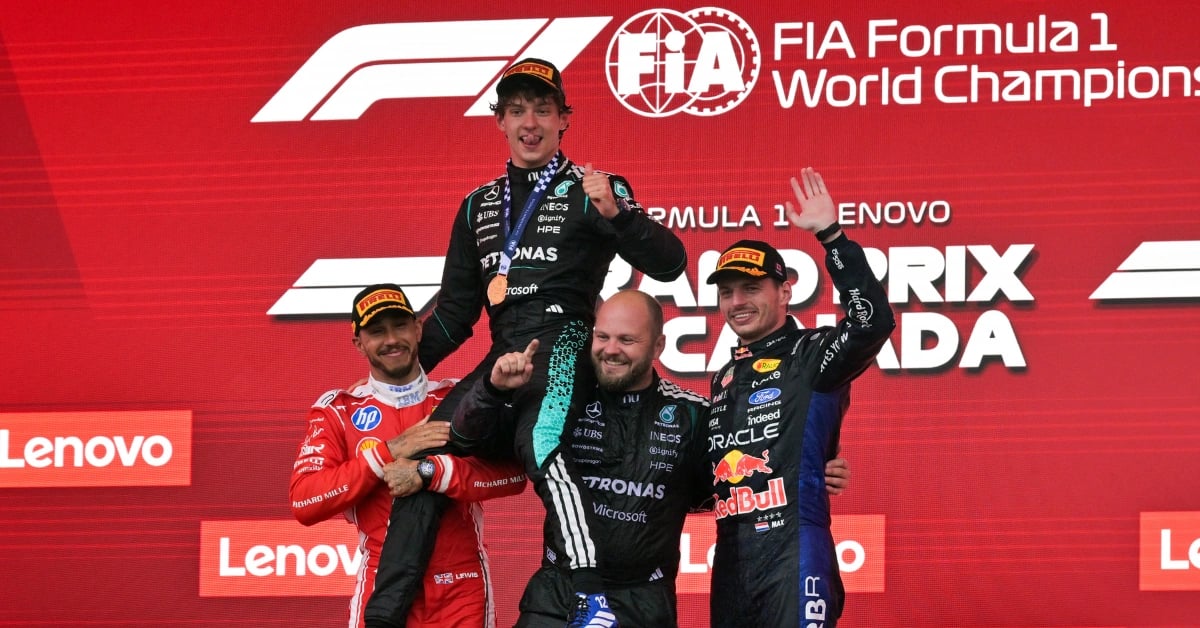
The Azerbaijan Grand Prix is also staged around a wall-lined street circuit with tight corners, and it remains one of the most productive venues for outsider bets. In 2024, George Russell inherited a shock podium after Sergio Perez and Carlos Sainz collided on the penultimate lap while fighting for third; Russell had been running a quiet fourth before the chaos handed him the result.
That same race saw Lando Norris recover from 15th on the grid to finish fourth, a reminder of just how unpredictable Baku can be for anyone patient enough to wait for the field to thin.
Timing Your Bet
Timing your Formula 1 bets is vital. Markets normally open on the Monday afternoon before the race weekend, which begins on Friday with two very informative practice sessions. There is a third practice session on Saturday, followed by the decisive qualifying session. Sunday is race day.
Odds will fluctuate dramatically between Tuesday and the completion of the first practice session, and anyone who takes their Formula 1 betting seriously will tell you that the earlier you examine all the F1 betting markets, the more likely you will find a stand-out price discrepancy.
There is no substitute for studying the stats when it comes to Formula 1 betting, so make sure you know each circuit just as well as the drivers.