How to Bet on an NBA MVP Winner

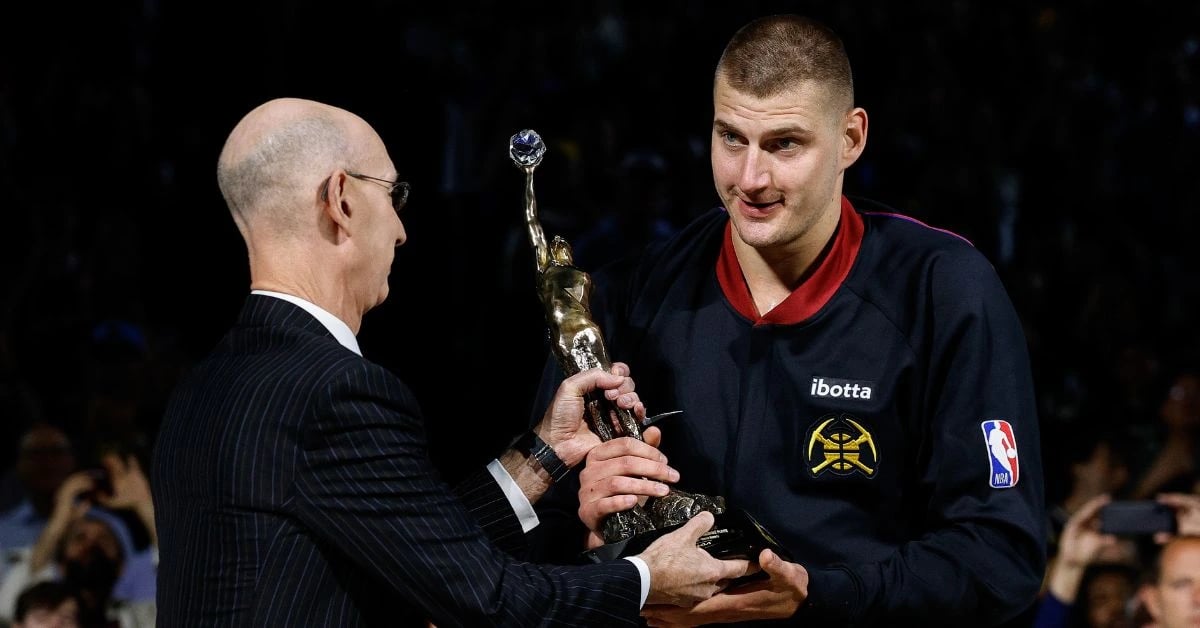
There isn’t a more individual-focused team sport than NBA basketball. More often than not, the best player on the court’s team has the advantage, and it’s what makes the MVP race so thrilling every year for NBA bettors.
When browsing the top sportsbooks, the usual suspects are in the running each year; it’s rare for a rising star to pop up that quickly into the MVP discussions. But there are a few trends and statistics to follow that will make your wager smarter.
Find a Winner
This may sound obvious, but it goes deeper than just finding a player on a winning team. Consider that over the four decades before 2018, the MVP award winner's team finished first in its conference 28 times. Six other MVPs finished second, one finished third (Michael Jordan, 1988), and one finished sixth (Russell Westbrook, 2017).
The years since have told a more complicated story. Giannis Antetokounmpo won back-to-back MVPs in 2019 and 2020 with the Milwaukee Bucks, who finished first in the East both seasons, with 60 and 56 wins, respectively. Those fit the classic mold perfectly.
But Nikola Jokić has since redefined what's possible, winning in 2021 with the Denver Nuggets finishing third in the West, in 2022 with a depleted Nuggets squad seeded sixth in the West (without Jamal Murray and Michael Porter Jr. for much of the season), and in 2024 with Denver tied for the best record in the West. Shai Gilgeous-Alexander's 2025 win came with the Thunder finishing 68-14, the best record in the NBA, the cleanest possible fit for the "find a winner" rule.
The broader principle still holds: MVP winners are always on winning teams and vault those teams into playoff contention. But the expectation that the winner must be a top-one or top-two seed has loosened. Jokić proved that a historic individual performance can overcome a middling team finish.
Think of it this way: find a player who is clearly the reason his team is as good as it is, whether that team finishes first or sixth.
A Storyline is Crucial
It's important to remember exactly who's voting for league MVP. It's not the coaches or the players. It's the media. And naturally, there's nothing the media loves more than a good storyline. It's simply not enough to post spectacular numbers or lead your team to the top of the standings, though both are required to be in the conversation.
More important is an angle and a storyline to attach to that player's season. Consider the offseason the team had. Did a fellow star leave, leaving that player to carry the load? Did that player have success in the previous season's playoffs and is ready to make the jump to super-stardom? Is there potential to break an NBA record in play? Could that player's team be on the cusp of winning a conference title?
The storyline matters as much as the numbers.
Jokić's 2022 win is the best recent example; he dragged an undermanned Nuggets team into the playoffs almost single-handedly, and the "one man carrying a broken roster" narrative won him the award over players posting bigger numbers on better teams. Giannis's 2019 win came with the Bucks breaking out as an unexpected powerhouse. SGA's 2025 campaign had the championship-year redemption arc, the scoring title, and a historically dominant OKC team built around him.
Finding a long-term, bigger-picture storyline to accompany the season you think that player will have goes a long way. Numbers are nice, but the story is what sells.
Find a Future Hall of Famer
The NBA is unique in that MVP winners rarely come out of nowhere and are rarely flashes in the pan. In the NFL, a quarterback can catch fire and win the MVP and regress to the mean, and we've seen baseball players put together majestic seasons only to fade away.
The NBA is different. Since the award was first handed out in 1956 to Bob Pettit, all but one player has been either in the Hall of Fame or on pace to be inducted. Thirty-two different players have won the award, and all of the retired winners are in the Hall of Fame. Nearly every active winner—LeBron James, Kevin Durant, Steph Curry, Westbrook, James Harden, Antetokounmpo, Jokić, and Joel Embiid—is either already enshrined or is a near-certain future inductee.
So when considering an MVP wager, ask yourself: is this player on a Hall of Fame career path, or at least in the early stages of one? In the NBA, sustained excellence is a prerequisite for the award, not just a single elite season.
Points Help, But the Jokić Era Changed the Rules
There's far more to basketball than scoring, and the MVP race now reflects that more than ever. For a long time, the conventional wisdom held that scoring was the surest path to MVP votes. Four of the five MVPs from 2014 to 2018 led the league in scoring, and those who didn't (Curry in 2015, Derrick Rose in 2011) had other dominant narratives carrying their case.
That formula has since been complicated significantly by Jokić. He won three MVPs (2021, 2022, 2024) while ranking outside the top 10 in scoring each time, as low as 18th in the league in 2021. His case was built on statistical dominance across every dimension: rebounding, playmaking, efficiency, and an almost unrivaled impact on his team's wins. Embiid (2023) and Gilgeous-Alexander (2025) swung back the other way, both winning the scoring title in their respective MVP seasons.
The honest updated picture: scoring is still a major advantage. Players who lead or nearly lead the league in scoring have a natural hook in MVP conversations, and it usually means they're carrying the offensive burden for their team. But the Jokić era proved that a player who impacts winning in other ways can win the award without being a volume scorer.
If your MVP candidate isn't a top scorer, they need an equally compelling statistical case across multiple dimensions, something only a handful of players are capable of building.