How to Pick NBA Rookie of the Year Award Winners

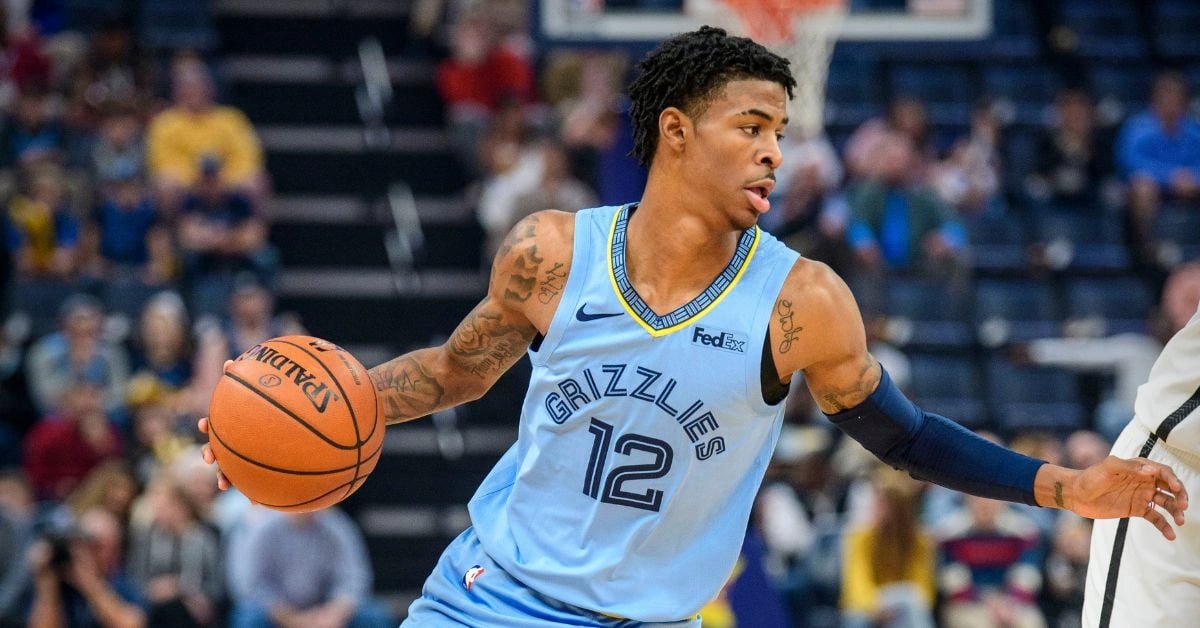
Regardless of what you consider a rookie to be (don't ask Donovan Mitchell), the NBA's Rookie of the Year race is annually one of the most exciting markets for users of NBA betting sites around the world.
The best young players showing off their current skill set, as well as what's to come, usually come down to the final month, making this a fun and potentially lucrative long-term wager. But there's much more involved than simply visiting the top online sportsbooks and backing the top picks.
Here are six things to look for when considering betting on the Rookie of the Year market.
Minutes Matter
This seems like an obvious one—a player needs to be on the court—but consider that from 2001 through 2025, the overwhelming majority of Rookies of the Year played 30 or more minutes per game. It remains a reliable baseline: Luka Dončić played 32.2 mpg, Ja Morant 31.0, Paolo Banchero 33.4, and Stephon Castle around 30. Victor Wembanyama just missed the threshold at 29.7, and LaMelo Ball won at 28.0—though Ball played only 51 games due to injury, limiting his sample.
The lesson stands: find a player with an open window to start and play big minutes each night, not just as a rotational player. The best rookies get longer leashes and are allowed to play through their mistakes. Identify the players who might reach the 30-minute-per-game mark, and you'll have a strong head start on finding your Rookie of the Year winner.
The Position Dominance Has Shifted
For a long stretch, the point guard ruled the ROY race. Nine of the 13 winners between 2005 and 2018 were point guards, and it made sense; they had the ball in their hands, racked up counting stats, and worked through their mistakes visibly.
That's changed notably in recent years. Of the seven winners from 2019 to 2025, only two (Morant and LaMelo Ball) were true point guards. Dončić was a guard/forward hybrid, Scottie Barnes a small forward, Banchero a power forward, Wembanyama a center, and Castle a combo guard. Wembanyama's unanimous 2024 win as a 7-foot-4 center was the starkest possible break from the PG trend.
The lesson now is less about position and more about role: whoever has the ball in their hands the most, impacts the game in the most visible ways, and accumulates counting stats will be in the conversation regardless of where they play.
When in Doubt, Go with a Top Pick
The correlation between draft position and ROY has strengthened in the modern era. From 2019 to 2025, every winner came from the top four picks: Dončić (No. 3), Morant (No. 2), LaMelo Ball (No. 3), Barnes (No. 4), Banchero (No. 1), Wembanyama (No. 1), and Castle (#4). That's seven consecutive winners from picks 1 through 4.
Going back further, from LeBron James in 2003-04 through 2025, the No. 1 and No. 2 picks have combined to account for the majority of wins, and the top-five picks have dominated almost entirely. Malcolm Brogdon (36th pick, 2017) remains the ultimate outlier. Otherwise, this is firmly a race for the top of the draft.
This shouldn't be shocking: The most talented players get the most opportunity, and opportunity drives the stat lines that drive ROY votes.
Points are a Good Barometer
When you play big minutes, you have more opportunities to score, and scoring is still the primary currency of ROY voting. Of the seven winners from 2019 to 2025, five led their class in scoring: Dončić (21.2 ppg), Morant (17.8), Banchero (20.0), Wembanyama (21.4), and Castle. LaMelo Ball ranked second in his class. Barnes was the outlier, winning despite not leading rookies in scoring.
Because efficiency is rarely the deciding factor, and most of the time the best rookies play for the worst teams, what stands out is the volume. High-scoring totals get attention. A dominant defensive rookie who doesn't produce on the other end is a long shot for the award.
Make sure your pick has the scoring potential to compete with the best in their class.
Make Sure Your Winner Is (Usually) a Loser
The "bad team" trend is real, but it doesn't always hold. For years, you almost had to go back to Amar'e Stoudemire (2003 Suns) to find a ROY winner on a team above .500. That changed with Ben Simmons (2018 Sixers), Brogdon (2017 Bucks), and most notably Barnes, who won in 2022 with a 48-win Toronto Raptors team, a genuine winning team, not a fringe case.
Still, the trend holds more often than not. Morant's Grizzlies finished below .500, LaMelo's Hornets were 34-38, Banchero's Magic went 34-48, and Wembanyama's Spurs were an NBA-worst 22-60.
Poor team records correlate with ROY wins because bad teams give rookies uncapped roles, guaranteed minutes, and counting stats that wouldn't exist on a deeper, more competitive roster. Castle's Spurs were the notable recent exception, winning on an improved team alongside Wembanyama.
But when in doubt, find the rookie who's carrying the most offensive weight for a rebuilding team.
Sustained Success
There's rarely a flash in the pan. From 1992 to 2013, all but five of the 24 Rookie of the Year winners went to at least two All-Star Games. The post-2018 class has reinforced that trend dramatically; Dončić, Morant, LaMelo Ball, and Wembanyama are all either current All-Stars or virtually certain future ones. Barnes made his first All-Star Game in 2024.
The Rookie of the Year award doesn't just crown the best player in a single class. It tends to crown the player with the highest floor and ceiling, the one who lands in the perfect situation with ample playing time and a supporting cast that helps their numbers.
Look for players you believe can become All-Stars in the long run, because the voters are usually thinking about that too.