Blackjack Strategy: The Ultimate Guide to Online Blackjack

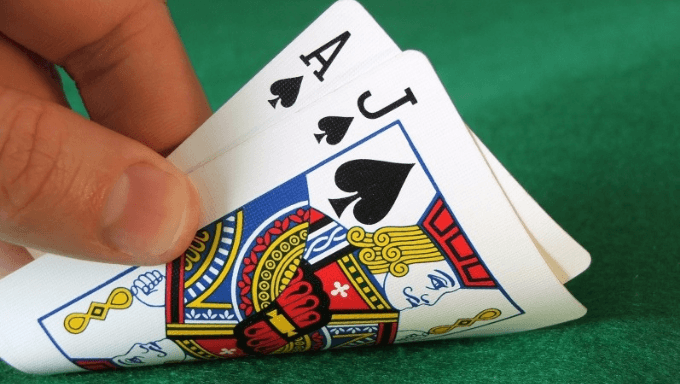
Blackjack is one of the most popular games at land-based casinos and online casino sites.
In this guide, Jonathan Raab, runner-up in the 2010 European Masters of Blackjack, explains how the game works and covers basic strategy, variants, side bets, staking systems, card counting and tournament strategy.
What is Blackjack?
Blackjack is a card game where the aim is to beat the dealer without exceeding 21, either by having a higher total or by remaining in the hand when the dealer busts.
Number cards are worth their face value, face cards count as 10 and aces as either 1 or 11. An initial two-card hand of an ace and a 10-value card is a blackjack.



How to Play Blackjack
Blackjack is played with one or more standard 52-card decks. The number of decks and other table rules can affect strategy, but the basic sequence of play remains the same.

Placing Your Bet
Before each hand, players place a bet within the table's minimum and maximum limits.
Once the cards are dealt, the original wager cannot be changed, although doubling down or splitting requires an additional bet.
Dealing the Cards
Each player receives two cards.
In a peek (American-style) game, the dealer receives a face-up card, or upcard, and a face-down hole card. If the upcard is an ace or a 10-value card, the dealer checks for blackjack before players act.
In a no-hole-card (European-style) game, the dealer starts with only the upcard and takes their second card after players have acted.
I explain later how this can affect the correct play in certain hands.
Player Options
If the hand continues, players choose their next move based on their cards, the dealer's upcard and the table rules. The main options are:
Hit: Take another card. This can be repeated until the player stands or their total exceeds 21.
Stand: Keep the current total and end the turn.
Double Down: Double the original bet and receive one final card.
Split: If the first two cards have the same value, place a second equal bet and divide them into two separate hands. Each hand is then played separately.
Surrender: Where available, end the hand after the initial deal and recover half the original bet.
The Dealer's Turn
After all players have acted, the dealer reveals their hole card or takes their second card.
The dealer hits on 16 or less and stands on 17 or more.
Settling the Hand
Any player who exceeds 21 loses immediately. If the dealer busts, all remaining player hands win.
Otherwise, the totals are compared: a higher total than the dealer wins, a lower total loses and an equal total is a push, with the stake returned.
Standard wins pay 1:1. Blackjack usually pays 3:2 and beats any 21 made with more than two cards. If both the player and dealer have blackjack, the hand is a push.
A 21 made after splitting is not blackjack and, if it wins, is paid at 1:1.



Basic Blackjack Strategy
The cards are random, but your decisions shouldn't be.
Basic strategy shows the best play based on your hand, the dealer's upcard and the table rules. It helps you decide:
✔ When to hit
✔ When to stand
✔ When to double down
✔ When to split pairs
Modern basic strategy dates to the 1950s, when four mathematicians published The Optimum Strategy in Blackjack in 1956 and Playing Blackjack to Win in 1957.
Identify Your Hand
Start with your first two cards. Pairs follow their own strategy; otherwise, identify whether your total is hard or soft.
A hard total has no ace counted as 11. A soft total includes an ace that can count as either 1 or 11.
Ace-six, for example, is a soft 17. If another card would take the total above 21, the ace can instead count as 1.
Blackjack Cheat Sheet
The chart below shows the recommended action for each hand.
To use it, find your hand on the left, then move across to the column for the dealer's upcard.

Chart assumptions: Four or more decks; dealer stands on all 17s and checks for blackjack before you act; doubling is allowed on any two cards and after splitting. No-hole-card exceptions apply against 10 or ace.
The chart covers all hit, stand, double and split decisions for this setup. Some plays may seem counterintuitive, but they offer the best expected result over time, not on every hand.
Below, I'll explain the main patterns behind them and the key adjustments for other setups.
When to Hit or Stand
The dealer's upcard drives most hit-or-stand decisions.
When the dealer shows 2-6, they are more likely to bust, so basic strategy often calls for standing on lower totals. Against a 7 or higher, you need a higher total before standing.
Hard 12 requires particular care: hit against 2 or 3, but stand against 4-6.
Soft hands allow more aggressive play because the ace can switch from 11 to 1. Soft 18 can be a hit, stand or double.
When to Double Down
Basic strategy calls for doubling when the odds justify increasing your stake in exchange for one final card.
The main opportunities involve hard totals of 9, 10 or 11 and soft totals from 13 to 18.
Because doubling requires an additional stake and limits you to one more card, the dealer's upcard and the game rules matter.
If doubling is not available, hit instead, except with soft 18, where you should stand.
When to Split Pairs
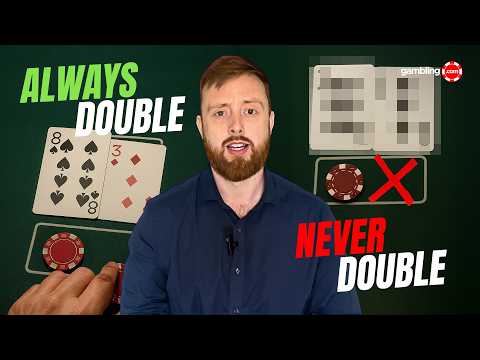
Being dealt a pair gives you the option to split, but that does not mean splitting is always the correct play.
Two eights make a hard 16, but splitting gives you two opportunities to build a stronger hand. Two fives, by contrast, make a hard 10 and should be treated as such rather than split.
For this common setup, split aces and eights and never split fives or tens.
All other pair decisions depend on the dealer's upcard.
Doubling after splitting can also make some splits more valuable because it allows you to double a strong hand formed after the split.
When to Surrender
Late surrender is available only in some games. For this setup, surrender hard 15 against 10 and hard 16 against 9, 10 or ace, unless the 16 is a pair of eights.
How Different Setups Change Basic Strategy
Different setups change a limited number of decisions.
In a no-hole-card game, players can double or split against a dealer 10 or ace before knowing whether the dealer has blackjack. If the dealer does, the additional stake is lost.
Therefore, hit hard 11 against a dealer 10 rather than doubling and do not split aces against a dealer ace or eights against a dealer 10 or ace.
If doubling after splitting is not allowed, splitting twos, threes, fours and sixes is correct against fewer dealer upcards.
The number of decks can also change a few close decisions, so use a strategy chart matched to the exact setup you are playing.



Blackjack Variants
Peek and no-hole-card blackjack are different setups of the same game, requiring only a few strategy adjustments. The variants below make larger changes to the deck, player options or payouts and require their own strategy.
Spanish 21
Spanish 21 uses 48-card decks, with all 10s removed but Jacks, Queens and Kings remain.
To compensate, some versions allow doubling after a hit and offer a rescue option that returns the additional stake while forfeiting the original bet. They may also pay bonuses for five-, six- or seven-card 21s.
Use a strategy chart designed for the specific Spanish 21 rules in play.
Blackjack Switch
Blackjack Switch is played with two hands of equal stakes. After the initial deal, players can swap the second card of each hand before deciding how to play them.
To offset that advantage, player blackjacks pay 1:1 and a dealer total of 22 pushes against non-blackjack hands. The switching decision and dealer-22 rule require a different strategy from standard blackjack.
Double Exposure
In Double Exposure, both of the dealer's cards are visible before the player acts.
Common compensating rules include 1:1 blackjack payouts and the dealer winning non-blackjack ties. Because the dealer's full total is known, hit, stand, double and split decisions differ substantially from standard blackjack.
Choosing a Blackjack Variant
A variant is not automatically better or worse than standard blackjack. Compare the payout for blackjack, dealer rules, available player actions and overall house edge, then use strategy matched to that version.


Blackjack House Edge
The house edge is the casino's theoretical advantage over many hands, not a prediction of what will happen in a single hand or session.
Basic strategy can reduce the house edge below 1% in many standard games, depending on the payout, deck count and doubling rules.
Some games go lower still. Microgaming's Classic Blackjack Gold Series and Aristocrat Interactive's Single Deck Blackjack each have a 99.91% RTP when played with correct basic strategy, a house edge of 0.09%.
But not every single-deck game has such a high RTP. Other rules can reduce the return, such as a 6:5 blackjack payout.

Casinos can still profit from a game with a low house edge because that advantage applies across a large volume of wagers.
Incorrect decisions and less favorable rules increase the main game's edge, while side bets carry higher edges.
Common Mistakes That Increase the House Edge
Even small departures from basic strategy can increase the house edge over time. Some of the mistakes I see most often are:
❌ Standing too early: Refusing to hit because another card could cause a bust, even when the dealer's upcard makes hitting the better long-term play.
❌ Playing soft hands like hard hands: Because the ace can change from 11 to 1, soft hands often require a different decision from the equivalent hard total.
❌ Splitting the wrong pairs: Under the setup covered by the chart, split aces and eights, but keep fives and tens together.
❌ Using the wrong strategy chart: No-hole-card play, deck count and whether doubling after splitting is allowed can change a few decisions.
❌ Taking insurance: Insurance is a side bet offered when the dealer's upcard is an ace. Basic strategy calls for declining it because its house edge is much higher than that of the main game.
❌ Taking a card for the table: Your decision can affect which card the dealer receives, but you cannot know whether that will help or hurt. Follow basic strategy for your own hand.
A correct play can lose and an incorrect one can win. Over time, repeated mistakes increase the casino's advantage.
Playing Online Blackjack
Blackjack sites offer two ways to play: computer-dealt games and live dealer tables.
Your preference may depend on the pace, presentation and level of interaction, while the rules and payouts determine how favorable each game is.
Computer-dealt blackjack uses a random number generator (RNG) to shuffle and deal virtual cards. You can play at your own pace without waiting for other players.
Live dealer blackjack at live casino sites features dealers using real cards in games streamed from dedicated studios and land-based casinos.
Hands follow the pace of the table, so play is usually slower. Many tables also allow interaction with the dealer.
How to Choose an Online Blackjack Game
Do not rely on the game name alone, as rules can vary even between similarly named versions. Before playing, check:
- Whether blackjack pays 3:2 or 6:5
- Whether the dealer checks for blackjack before players act
- How many decks are used
- Whether doubling after splitting is allowed
- Any restrictions on doubling, splitting or resplitting, and whether surrender is available
- The minimum and maximum stakes
Always choose a game where blackjack pays 3:2 and use a strategy chart matched to its setup. Check the game's information or help screen for the full rules.
Blackjack Side Bets
Side bets are optional wagers placed alongside the main blackjack bet and settled separately. They offer larger potential payouts but carry a higher house edge.
Rules and paytables vary between games, but my advice is simple: avoid side bets. Despite their eye-catching payouts, they offer much worse value than the main game.
The tables below compare each payout with the approximate odds of that result occurring.
Insurance
Insurance is offered when the dealer's upcard is an ace. The insurance bet is half your original stake and pays 2:1 if the dealer has blackjack, offsetting a losing main bet.
If you already have blackjack, the same choice is known as even money.
If the dealer does not have blackjack, you lose the insurance bet and the main hand continues.
Under basic strategy, you should always decline insurance, although card counters may occasionally identify favorable situations.
Perfect Pairs
The Perfect Pairs side bet pays when your first two cards have the same rank. The payout depends on how closely they match.
Example paytable (eight decks):
| Pair | Definition | Payout | Approx. Odds* |
|---|---|---|---|
| Mixed Pair | Same rank, different colors | 5:1 | 25/1 |
| Colored Pair | Same rank and color, different suits | 12:1 | 51/1 |
| Perfect Pair | Same rank and suit | 25:1 | 58/1 |
Across all three winning outcomes, this 5-12-25 paytable returns approximately $92.05 for every $100 staked over the long term, giving it a house edge of 7.95%.
21+3
The 21+3 side bet combines the player's first two cards with the dealer's upcard to form a three-card poker hand.
Example paytable (eight decks):
| Hand | Payout | Approx. Odds* |
|---|---|---|
| Flush | 5:1 | 16/1 |
| Straight | 10:1 | 31/1 |
| Three of a Kind | 30:1 | 192/1 |
| Straight Flush | 40:1 | 484/1 |
| Suited Three of a Kind | 100:1 | 4,090/1 |
Across all five winning outcomes, this paytable returns approximately $96.30 for every $100 staked over the long term, giving it a house edge of 3.70%.
*Odds are rounded per result. A single side bet covers all listed outcomes, which are combined to calculate the return and house edge.


Blackjack Staking Systems
One point is crucial: staking systems do not alter the odds or house edge. They only vary bet sizes after wins or losses, affecting exposure and short-term bankroll swings.
Progression systems fall into two categories:
Negative progression systems increase stakes after losses in an attempt to recover previous losses.
Positive progression systems increase stakes after wins, increasing your exposure if the winning sequence continues.
Below, I summarize some of the best-known examples before explaining the Staggered Progressive System I developed.
Negative Progression Systems
| System | How It Works | Main Limitation |
|---|---|---|
| Martingale | Double after a loss; reset after a win | Stakes escalate rapidly |
| Fibonacci | Move forward after a loss; back after a win | Losing runs still create large stakes |
| D'Alembert | Add one unit after a loss; subtract one after a win | Recovery can be slow |
| Labouchere | Adjust stakes using a number sequence | Complex and can create large stakes |
Positive Progression Systems
| System | How It Works | Main Limitation |
|---|---|---|
| Paroli | Double after a win; reset after a loss | One loss ends the progression |
| 1-3-2-6 | Follow a four-bet sequence after wins | A late loss can erase earlier gains |
| Oscar's Grind | Add one unit after a win; maintain the stake after a loss | Cycles can be long and stakes can rise |
Why Staking Systems are Harder to Use in Blackjack
Blackjack complicates staking systems because doubling and splitting can require additional bets during the same round.
A staking system should determine the size of your opening bet, but it should never leave you unable or unwilling to follow basic strategy.
Never increase your bets to recover losses. Set a loss limit before you play and stop when you reach it.
Raab Staggered Progressive System
In the late 1990s, I developed my own blackjack progression system as an alternative to positive progressions such as Paroli and Oscar's Grind.
It uses a six-stage sequence, increasing the stake after each net win and resetting after a net loss. Unlike Paroli, it doubles the stake only after the first win, then uses smaller increases.
Like any staking system, it cannot change the house edge or guarantee a profit. Its purpose is to structure stake increases during a winning sequence without chasing losses.
How the System Works
The sequence is:
2 → 4 → 5 → 6 → 8 → 10 units
A unit is a fixed amount chosen before you start. For example, if one unit is $0.50, the sequence is:
$1 → $2 → $2.50 → $3 → $4 → $5
The round's net result sets the next stake: advance one stage after a win, restart at two units after a loss and repeat the stake after a push or a split round that ends level.
After winning the sixth stage, restart at two units.
The table shows the stake and cumulative profit after winning each stage. It assumes no hand is doubled or split and all wins pay 1:1:
| Stage | Stake | Cumulative Profit |
|---|---|---|
| 1 | 2 units | +2 units |
| 2 | 4 units | +6 units |
| 3 | 5 units | +11 units |
| 4 | 6 units | +17 units |
| 5 | 8 units | +25 units |
| 6 | 10 units | +35 units |
Using the $0.50 example, the first two wins put you $3 ahead. If the $2.50 third bet loses, you still finish $0.50 ahead.
A loss at any later stage would also leave the sequence ahead, although that does not guarantee a profitable session.
Blackjack payouts, doubles and splits can change these results. Basic strategy should always take priority over the staking sequence.
Choose a unit size that leaves enough funds for the 10-unit final stake and any additional bets needed to double or split.

Card Counting in Blackjack
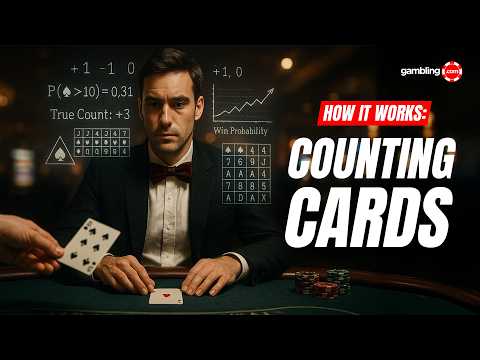
Unlike staking systems, card counting can indicate when the cards remaining in the shoe favor the player.
Most counting systems assign values to groups of cards and maintain a running total rather than requiring you to memorize every card.
A higher proportion of 10-value cards and aces can improve the player's expected return, allowing counters to adjust their stakes and, in some cases, their playing decisions.
A recent run of wins or losses does not, by itself, make the next hand more likely to win or lose. Card counting is based on which cards have been dealt, not the pattern of results.
Under the right conditions, card counting can give the player an edge, but it cannot predict the next card or guarantee a profit.
Why Card Counting is Difficult
The challenge is not just keeping the count. You must maintain it while following basic strategy, account for the number of decks remaining and cope with short-term swings even when the count is favorable.
How much of the shoe is dealt also matters. Early reshuffles give counters less information, while continuous shufflers return used cards to the shoe, preventing a stable count.
Can You Count Cards Online?
Card counting is ineffective in computer-dealt games that reset or reshuffle the virtual deck between hands.
Live dealer games use physical cards, so counting is theoretically possible. In practice, cut cards and shuffle procedures limit how much of the shoe is dealt.

Blackjack Tournament Strategy
Traditional blackjack tournaments are rare online; casino sites usually run leaderboards based on points or winning streaks instead.
In a traditional tournament, everyone starts with the same chip stack and plays a fixed number of hands. You still face the dealer, but the goal is to finish with more chips than your opponents.
From my experience, the key lesson is that beating the dealer is not always enough. Basic strategy remains the foundation, but chip position, hands left, betting order and your opponents' wagers can change the right play.
Betting later can help because you see opponents' stakes first. Near the end, you may need to change your bet or depart from basic strategy to advance.
For example, if an opponent stands on hard 17 and you must beat them on the final hand, you have to hit your own hard 17, even though basic strategy says stand.
Final Blackjack Checklist
I hope you've found this guide useful. If you remember just five things, make them these:
✔ Choose a game where blackjack pays 3:2, not 6:5.
✔ Use a strategy chart matched to the game's setup, including its deck count and dealing procedure.
✔ If you're following basic strategy, decline insurance and avoid other side bets.
✔ Never let a staking system override basic strategy.
✔ Set a loss limit and never chase losses. Even when you follow basic strategy correctly, you can still have a losing session. Don't raise your stakes or keep playing simply to recover money.