Illinois Law Doesn't Just Tax Kalshi, Polymarket; It Could Shut Them Out Entirely

Key Takeaways
- SB 3019 would add a per-wager tax on prediction market trades.
- It also classifies "exchange wagers" as sports wagering, meaning only Illinois-licensed sportsbook operators can legally offer them, not standalone platforms like Kalshi or Polymarket.
- Kalshi sued the state in June, arguing that the law would require prediction markets to geofence Illinois users to obtain a license, which would conflict with its requirement as a CFTC-designated contract market to operate nationally.
Illinois has brought prediction markets under its sports wagering law, and while the new per-wager tax has gotten attention, the bigger issue for platforms like Kalshi and Polymarket is more fundamental: the law may not allow them to operate in the state at all.
How SB 3019 Requires Prediction Market Licensing
Senate Bill 3019, signed by Gov. JB Pritzker on June 16 as part of the state's fiscal year 2027 budget, amends Illinois' Sports Wagering Act to classify "exchange wagers" (agreements, contracts, transactions, or swaps traded on a prediction market tied to a sporting event) as a form of sports wagering.
That single definitional change means exchange wagers are now only legal in Illinois if offered by an operator holding an Illinois sports wagering license.
Kalshi and Polymarket don't hold Illinois sports wagering licenses. They did not need one before because they're federally regulated by the CFTC as designated contract markets, not as gambling operators.
SB 3019 requires them to get one anyway if they want to keep offering sports-related contracts to Illinois users. That license isn't cheap: $15 million for an initial four-year term, with $1 million for four-year renewals.
Could Kalshi, Polymarket Even Get Licenses?
Setting aside the cost, Illinois' licensing terms conflict with how prediction markets are required to operate under federal law. The state's framework requires a licensee to accept wagers only from people physically located in Illinois, meaning Kalshi would need to geofence Illinois users out of its national contract markets.
Kalshi argues that this directly conflicts with the CFTC's requirement that designated contract markets offer their products on a non-discriminatory, nationwide basis. In other words, complying with Illinois law could put Kalshi in violation of its federal obligations, and noncompliance exposes it to state enforcement instead.
The de facto winners under this framework are existing Illinois-licensed sportsbooks, which could launch their own exchange-style products under their current licenses, while standalone prediction market platforms are boxed out unless they restructure their entire national operating model just for Illinois.
Law Adds Per-Wager Tax on Prediction Markets
Layered on top of the licensing question, SB 3019 also imposes a per-wager tax on exchange wagers: 1.75% on the first 5 million exchange wagers a licensee handles per fiscal year, rising to 3.5% beyond that. The bill separately added a 0.2% tax on cryptocurrency transactions, which has drawn criticism of its own.
But the tax only applies to whoever is actually licensed to offer these products, which, again, isn't Kalshi or Polymarket under the current framework.
Kalshi's Legal Response
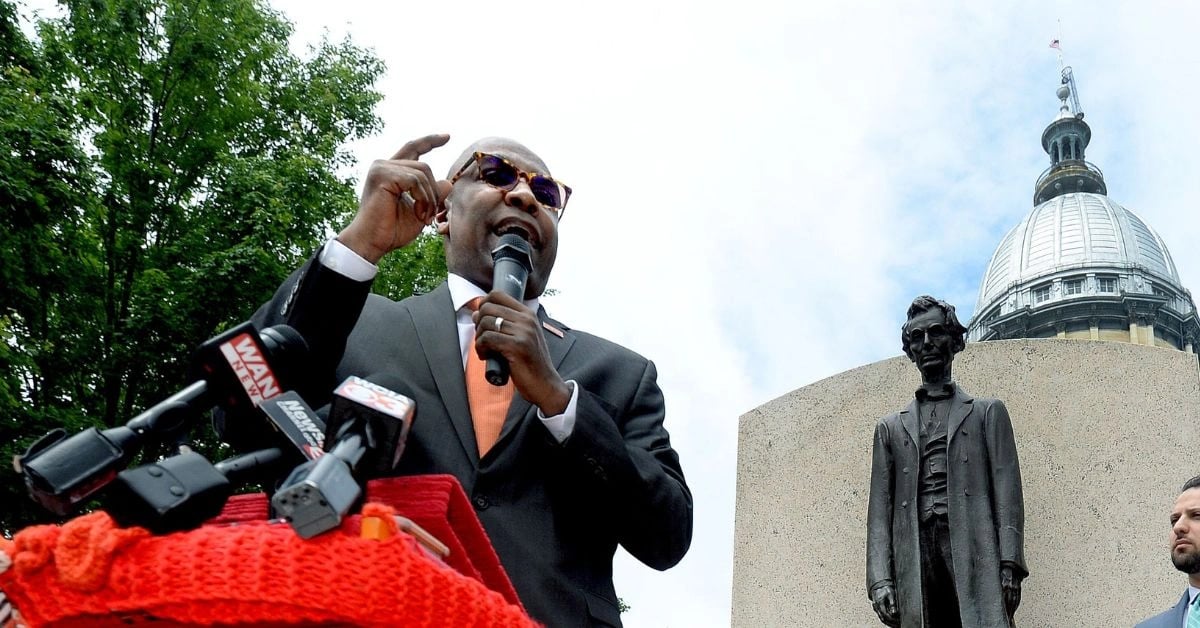
Kalshi sued Illinois in the U.S. District Court for the Northern District of Illinois on June 24, naming Gov. Pritzker, Attorney General Kwame Raoul (pictured), and Illinois Gaming Board members as defendants. The complaint argues SB 3019 violates the Supremacy Clause by attempting to regulate event contracts that fall under the CFTC's exclusive jurisdiction under the Commodity Exchange Act.
Kalshi is seeking emergency injunctive relief to block enforcement, arguing that both the licensing requirement and the geolocation restriction it would force are unconstitutional as applied to a federally regulated contract market.
This isn't Illinois' first clash with prediction market operators: the Illinois Gaming Board had already sent cease-and-desist letters to Kalshi, Polymarket, and Crypto.com, and the CFTC separately sued Illinois in April over the same underlying jurisdictional dispute.
Illinois is also not alone: Kentucky became the ninth state sued by the CFTC in this broader campaign, after imposing its own 14.25% prediction market tax.
What This Means for Prediction Market Traders in Illinois
For now, the state and prediction markets are in a standoff: SB 3019's provisions technically took effect July 1, but enforcement against Kalshi is on hold while the federal court weighs the Supremacy Clause question.
If Illinois prevails, expect exchange-style prediction products to show up as features inside existing sportsbook apps rather than through Kalshi or Polymarket directly.
If Kalshi prevails, it could set a precedent limiting how far other states can go in forcing federally regulated platforms into state gambling licensing frameworks.

Refer to Cashback Terms & Conditions for full program terms.