When to Raise or Call in Texas Hold'em

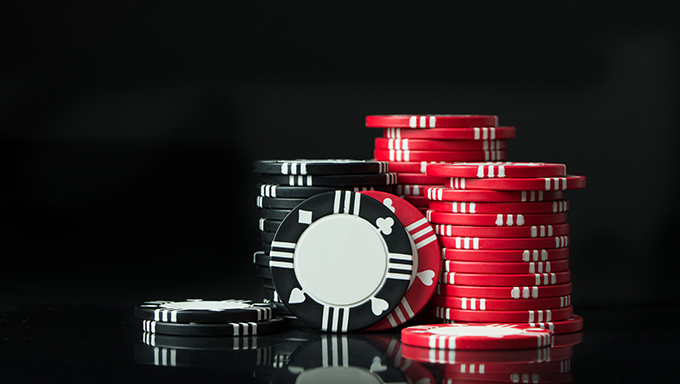
The difference between raising and calling is often seen as aggressive versus cautious. The act of raising is a show of strength against opponents and can be used to scare off opponents in one-on-one situations. Knowing when to raise can make it easier to build your stack.
The Value of Position
First, it is vital to understand the importance of position. Poker pros will always want to know a player’s betting position relative to their opponents when analyzing hands, as this can often be more important than cards in determining the winner.
For clarity, the three positions are early, middle, and late. Understanding each type can improve decision-making in raising or calling, as it helps players know when they are in a position of strength or weakness. As an example, the positions below have been defined for a table with nine players:
- Early – first three players after the small blind and big blind
- Middle – fourth and fifth players after the blinds
- Late – sixth and seventh players, who are just before the blinds
Comparatively, the early players are considered to be in a weaker position because they act before their opponents, while the late players are stronger because they have more information to inform their decision-making. As a result, pro players expect to make more money from the late position.
When to Raise
In the example above, it is extremely advantageous to be the seventh player, who is the last player before the blinds. After seeing a wave of decisions, the late player can tell whether they can raise to win the hand.
The first situation to raise is pre-flop, which can be done in a couple of ways. Firstly, it can be used as a bluffing technique to steal blinds from players in the early and middle positions when they appear unconfident in their hands.
A second instance is to use strong pocket cards to take blinds from players. This could be with a pair of Aces, which gives the strength to bet heavily and scare off opponents who have not yet made a pair or would be hoping for a straight or a flush.
After the flop, the most effective type of raise is when the late player believes they can bet out their opponents. Checks, folds, or low raises are moments when an extremely large raise (two-thirds of a stack) can convince opponents they do not want to call. Aggression is the best strategy here, as a low raise might convince players to limp in for the turn and river.
When to Call
Poker pro Bill Edler swears by the strategy of folding 90% of hands from under the gun, which is playing in early position immediately after the big blind. His rationale is that being the first player to act will force him to make a decision without having any information to work with. Consequently, it is tough to ensure that even good hands can be profitable.
For casual players, however, an adjusted version of this strategy can be effective against opponents who are less experienced than pros. Essentially, this would entail folding low-value cards that do not have straight potential (e.g., 2-7) or a face card with a low kicker (e.g., J-3).
If a great hand appears (e.g., A-Q or K-K), a casual player might feel it is worth the risk to call the big blind and see the flop. Casual players can do this at low-stakes or beginner tables where sharks are unlikely to be lurking.
By understanding when to raise or call, it can make it simpler to spot when players are bluffing. As a result, it might be possible to get a great read on an opponent to call and catch them out when they are bluffing from the late position – note that this is a more advanced strategy compared to the examples above.
Benefits of Aggression vs. Caution
- Profitability – Being in a late position can let players act more aggressively than timid opponents, stealing blinds and pots.
- Bluffing – Another benefit of late position is that it can be simpler to bluff when a player does not even have a hand.
- Restraint – Cautious play can protect players from losing large sums of chips when betting from early position.
- Reading – Sitting out when in an early position can be a useful time to analyze opponents for reads that can be used against them later.
Choosing when to raise or call is mostly determined by position. Use the examples above to understand when each will be more effective. To test your newly acquired knowledge, go to your favorite poker site and give it a shot.